
Analysis of Jetronica Technology
The following analysis of Jetronica technology combines its potential industrial applications and market advantages.
I. Potential Technological Breakthroughs
1. High-Precision Droplet Control
Jetronica may adopt Variable Sized Droplet Technology (VSDT) to achieve precise control of droplets as small as 5pl, improving smoothness in color transitions.
It may also optimize satellite droplet suppression through intelligent waveform modulation, ensuring continuous and consistent printed lines.
2. Materials and Ink Innovation
Jetronica could develop eco-friendly UV-curable inks that balance strong adhesion with low energy consumption, meeting the demands of high-speed industrial printing.
There may also be exploration of functional inks (such as conductive inks or biocompatible inks), expanding applications into emerging sectors like electronics and medical manufacturing.
3. System Integration Optimization
The technology may integrate real-time monitoring systems capable of automatically adjusting printhead voltage, temperature, and ink viscosity, reducing the risk of misfiring or ink interruption.
It could also implement pre-RIP processing technology to shorten print preparation time and improve production efficiency.
II. Industry Application Scenarios
Industrial Coding and Marking
High-speed, high-resolution printing (e.g., 600 dpi and above) to meet packaging and PCB identification requirements.
Flexible Electronics
Inkjet printing of OLED materials, potentially advancing display manufacturing technologies.
III. Technology Comparison and Industry Trends
| Feature | Jetronica (Estimated) | Thermal Inkjet (TIJ) | Piezo (e.g., PrecisionCore) |
| Printhead Lifespan | Potentially extended through new materials | Short (requires regular replacement) | Long (no thermal stress damage) |
| Media Compatibility | May support more specialty materials | Limited due to heat-sensitive media | Broad compatibility |
| Cost | To be validated | Low (cartridge-based design) | Higher initial cost but longer lifespan |
Current inkjet technology is moving toward:
- Ultra-high-speed array printheads (100,000 droplets per second)
- Green manufacturing solutions (water-based UV inks)
IV. Core Technical Characteristics
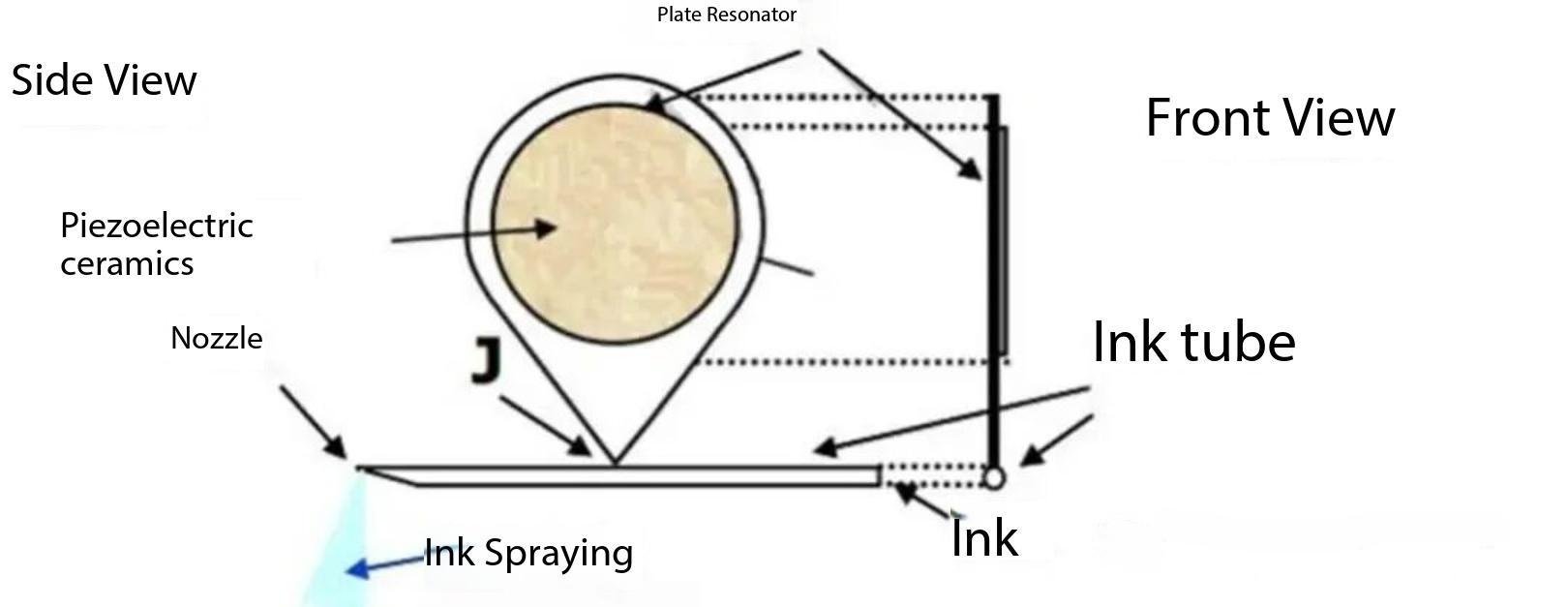
Multi-Material Dispensing Capability
Supports precise dispensing of liquids or powders, making it suitable for industrial decoration and electronic printing applications.
Wide Flow Rate Range
Capable of covering extremely low flow rates (microliter level) to high flow rates (milliliter level), meeting diverse process requirements.
Refurbishable Nozzle Design
Modular maintenance reduces long-term operating costs and improves return on investment (ROI).
V. Cost and Efficiency Advantages
Low Production Cost
Simplified equipment structure and reduced reliance on consumables make it suitable for large-scale industrial applications.
Low Total Cost of Ownership
Repairable nozzle systems extend lifespan, reducing replacement costs by 30%–50% compared to traditional printhead designs.
VI. Industrial Application Scenarios
Decorative Industry
Efficiently solves complex pattern printing challenges, such as wood grain or metallic texture coatings.
Electronics Manufacturing
Suitable for precision coating of conductive inks and adhesives.
Analysis of the Relationship Between Droplet Generation and Apparent Resolution in Jetronica Technology
The following analysis explores the relationship between droplet generation and apparent resolution in Jetronica technology, based on its technical principles and industrial applications.
1. Mechanism Linking Droplet Generation and Apparent Resolution
Multi-Droplet Recirculation Strategy
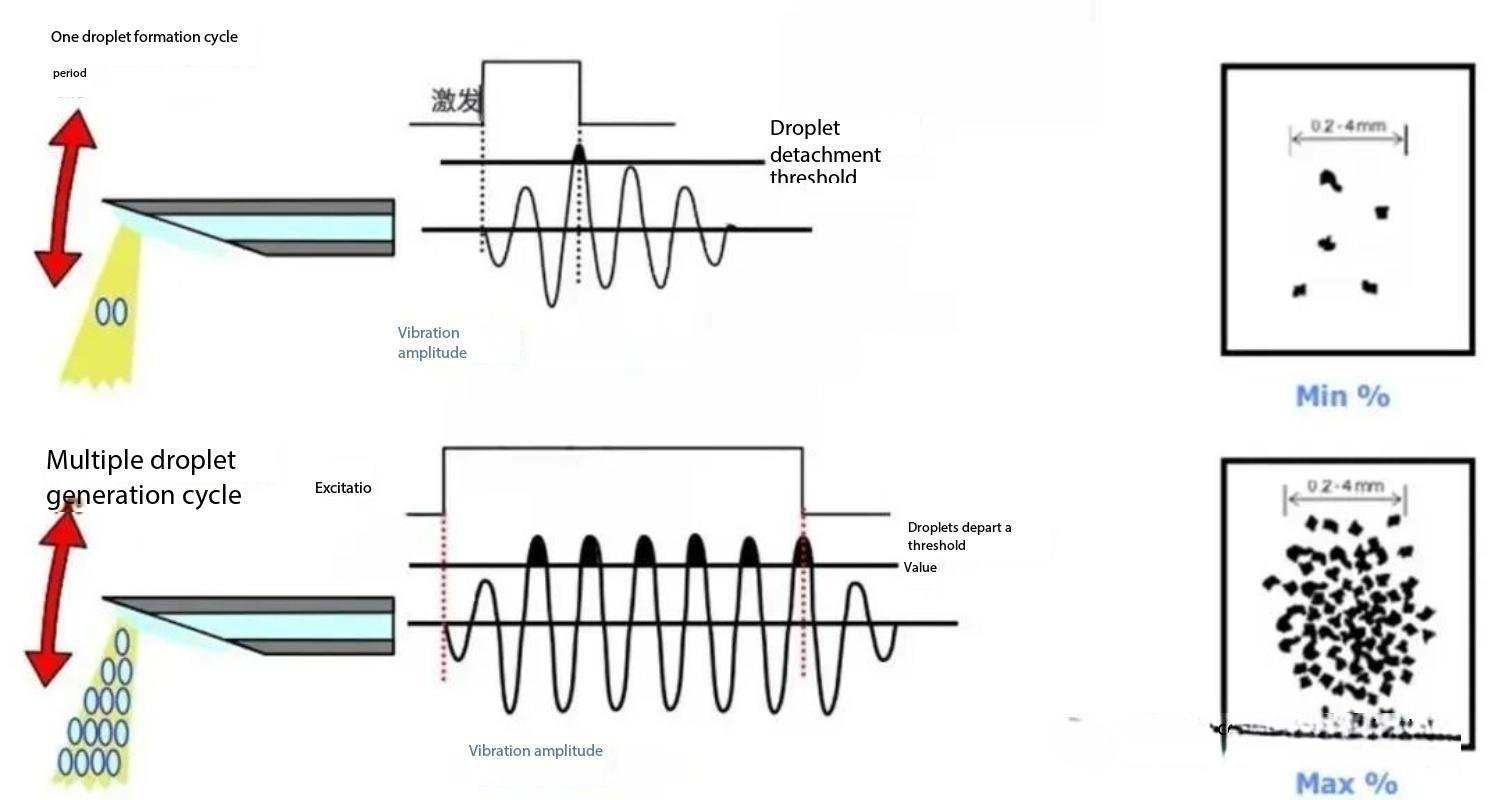
- By ejecting multiple droplets per cycle (e.g., 2–4 droplets), apparent resolution can be enhanced without increasing the physical resolution of the printhead.
- For example, the 768Jet™ printhead uses 256 independently controlled channels to enable high-density droplet stacking, thereby improving pattern detail and image sharpness.
- Precise droplet spacing control (e.g., ±7.5 µm accuracy) ensures that multi-droplet stacking avoids overlap or gaps, preventing image distortion.
Dynamic Frequency Modulation
- Supports high-frequency operation up to 10 kHz.
- Enables rapid switching between droplet ejection modes (e.g., 64 droplets/second to 80 droplets/second).
- Allows flexible adaptation to varying resolution requirements without modifying hardware structure.
2. Technical Advantages
Cost-Effective High Precision
- Refurbishable nozzle design reduces long-term maintenance costs.
- Multi-droplet cycling reduces dependence on ultra-high physical resolution printheads, achieving a balance between performance and cost efficiency.
Industrial Adaptability
- Compatible with liquids of 6–14 cP viscosity.
- Supports acidic and alkaline media.
- Suitable for applications such as electronic printing and industrial decoration.
3. Application Examples
Printed Electronics
Multi-droplet stacking enables micron-scale conductive line printing, such as in AMOLED inkjet manufacturing processes.
Microfluidic Devices
In droplet network technologies, coordinated multi-droplet deposition can construct complex micro-reactor structures.