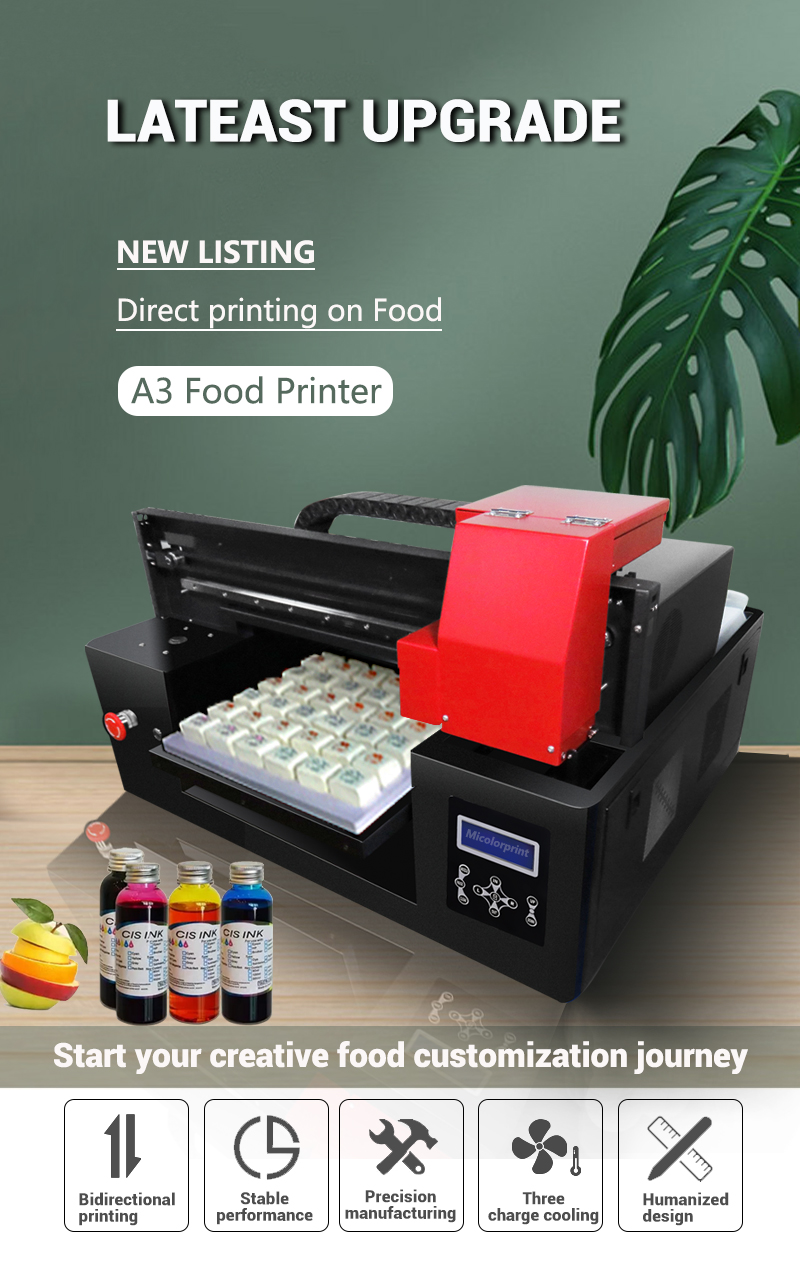
Commercial Edible Food Printer for Cakes, Cookies & Chocolates — Print photos, logos and designs directly onto edible surfaces.
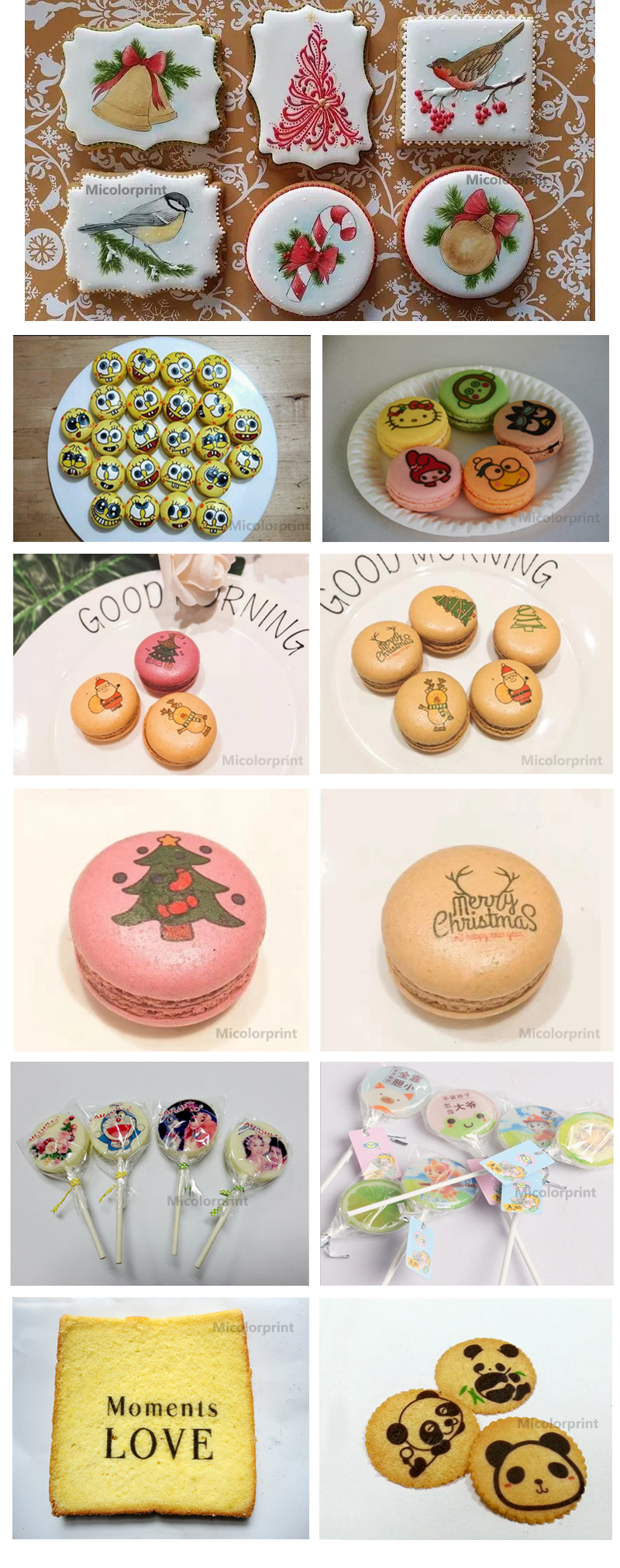
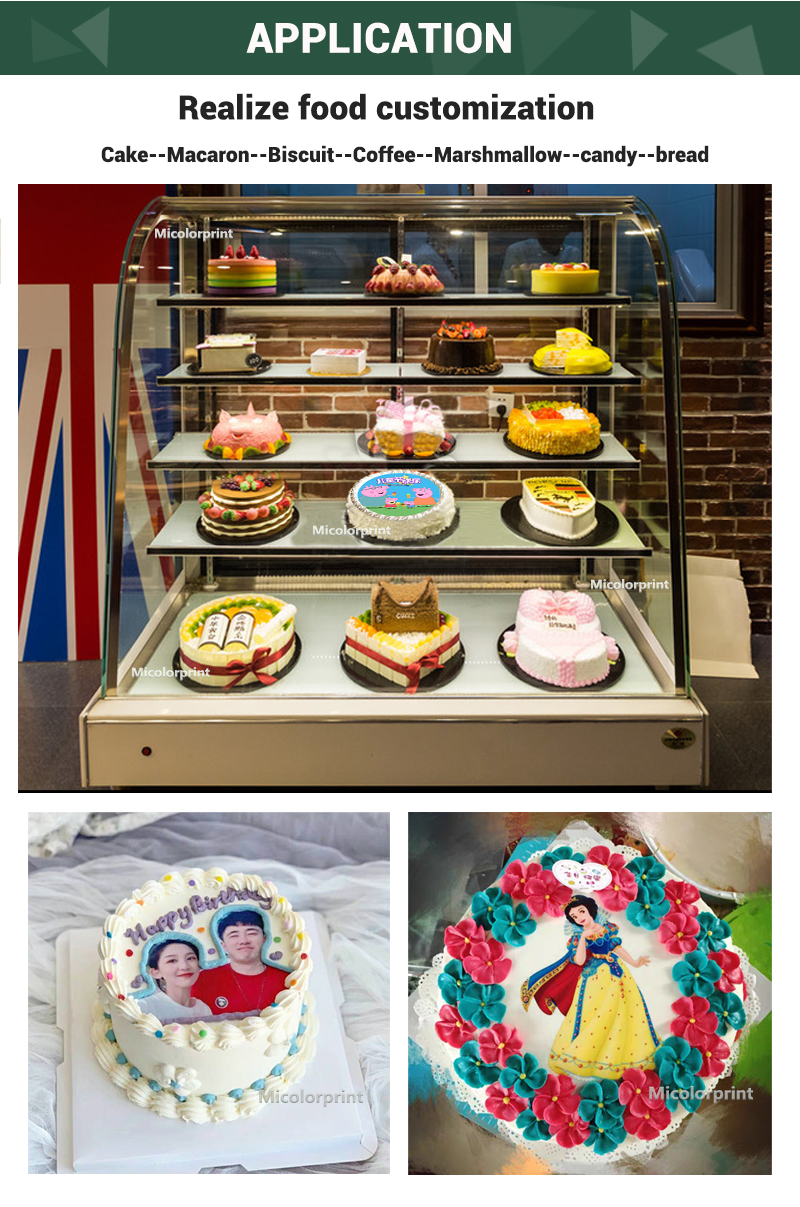
Make your own design, picture, Emoji, and Messages on your favorite Macroons, Biscuits, Cakes, Chocolate ETC. Using patented printing technology, the machine creates inspiring printing from any image or text atop the foam layer of coffee beverages. Create a moment and forge a connection with your customers.
Product categories of Food Printer, we are specialized manufacturers from China, Food Printer, Food Printing Machine suppliers/factories, wholesale high-quality products of Digital Food Printer R & D and manufacturing, we have the perfect after-sales service and technical support. I look forward to your cooperation!
Many people have likely seen the meticulously crafted cakes, candies, chocolates, and breads made by bakers and pastry chefs. However, this “edible inkjet food printer” takes this creativity to a whole new level. Using the same technology as regular desktop inkjet printers, it ejects edible ink that creates incredibly fine foam art. Text, drawings, and images are all no problem for it; it can do it all.
Professional Edible Food Printer designed for direct printing on cakes, chocolates, macarons, cookies, and other edible surfaces. Using food-grade edible ink, this machine delivers vivid, safe, and high-resolution images for bakeries, pastry shops, dessert studios, and customised food businesses.
This Edible Ink Food Printer is a specialised digital printing solution developed for the food and dessert industry. It enables direct, high-resolution printing on a wide variety of edible items such as cakes, chocolates, macarons, cookies, fondant sheets, and rice paper, using certified food-grade edible ink.
Designed for professional bakeries and customised dessert businesses, this machine allows you to easily add logos, photos, patterns, text, and creative designs to edible products—enhancing visual appeal and brand value without compromising food safety.
🍰 Key Features & Advantages
🖨️ Safe & Food-Grade Printing
Uses FDA-approved / food-grade edible ink
Ink is odorless, non-toxic, and safe for human consumption
Complies with food safety standards for edible decoration
🎨 High-Resolution Image Quality
Produces sharp details, smooth gradients, and vivid colors
Perfect for printing photos, cartoon designs, logos, and fine text
Ensures consistent quality for professional dessert presentation
🍪 Wide Edible Application Range
Suitable for printing on: ✔ Cakes & cake surfaces ✔ Chocolate & chocolate plaques ✔ Macarons ✔ Cookies & biscuits ✔ Fondant sheets & edible paper
⚙️ Easy Operation & User-Friendly Design
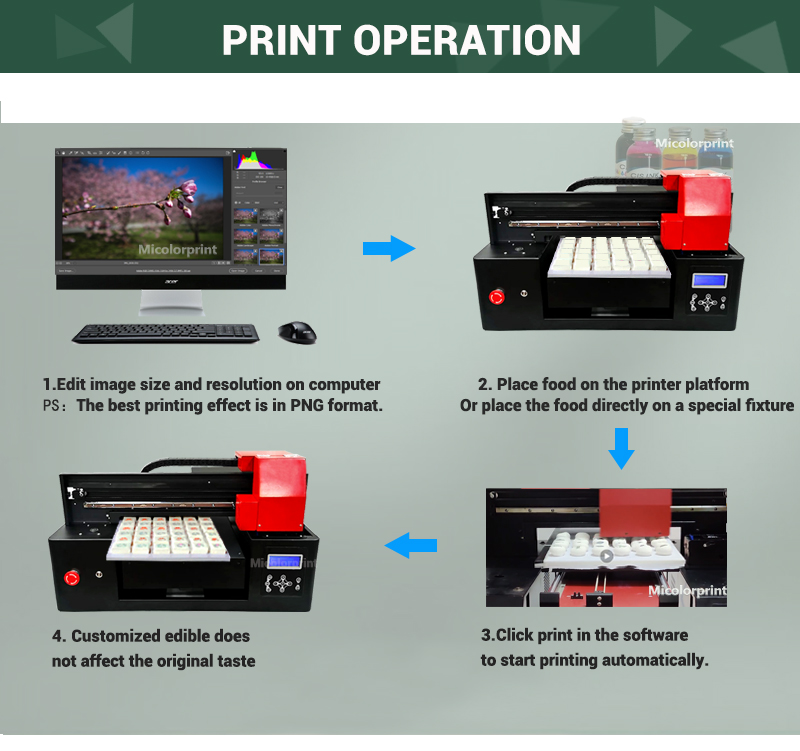
Simple workflow: place food → send image → Adjust the height of the print platform (ensure the food does not come into contact with the head).→ print directly
Compatible with common image formats such as JPEG, PNG, and TIFF
Works with Windows systems and mainstream design software
🧼 Easy Cleaning & Maintenance
Designed for food-use environments
Easy ink replacement and cleaning process
Helps maintain hygiene and stable performance
Products Details
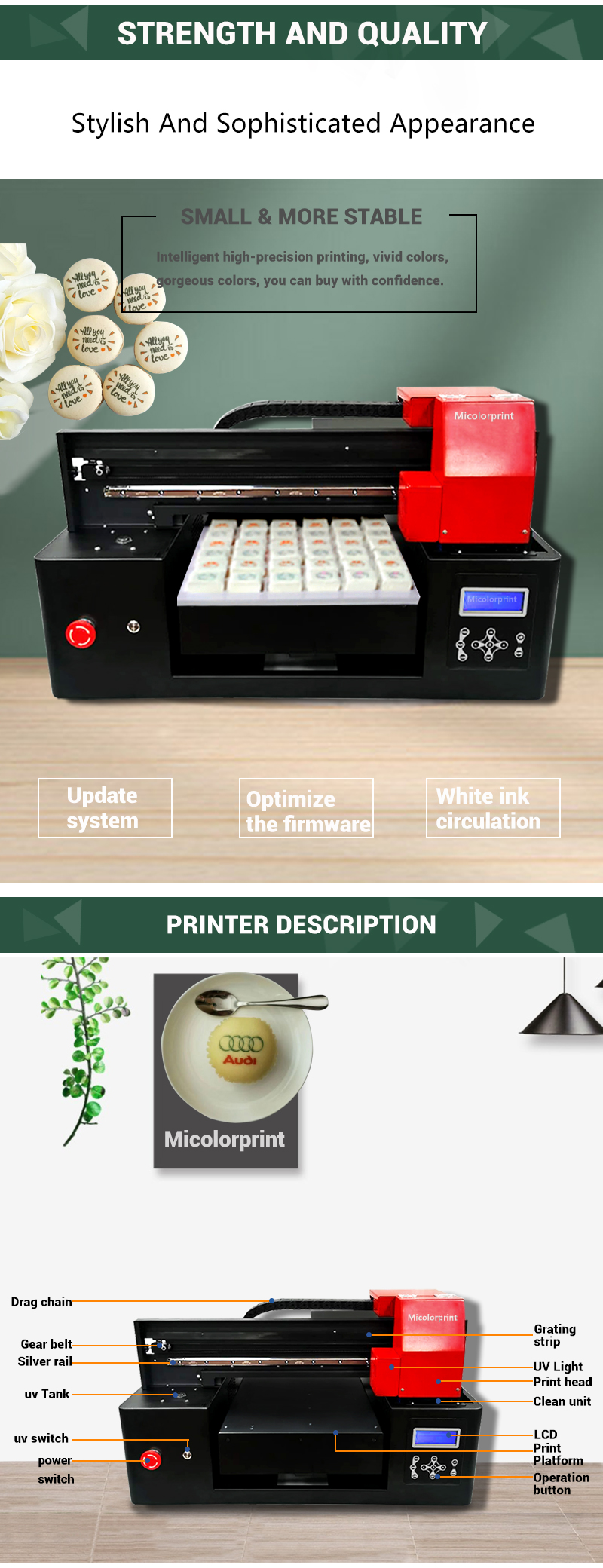
PRINT BOARD
Stable print board ensures consistent image quality. The new print head board has strong stability, shortens the distance between it and the print head, and improves the data transmission speed.
CLEANING UNIT
Self-cleaning unit prolongs nozzle life and reduces maintenance downtime. It can clean the print head. When the printer is not working. It can seal the print head to isolate air.
INK BOTTLES
Portable ink bottles with wide-mouth design for fast refills. Portable ink bottle, wide mouth design, it is more convenient to add ink.
SILENT SILVER RAIL
Durable and not rusty, and makes less noise and is quieter. Silent rail reduces noise for comfortable work environment.
Our edible food printer can also be used for customized candy printing, including logos, text, patterns and promotional designs.
It helps confectionery companies create personalized candy products for events, gifts and brand marketing.
Specifications Table
Printer Model :
MC-H1S Food Printer
Printer Size :
69*73*43cm
Printer Weight :
50kg
Printer Color :
Red-black / Customised
Printing Way :
Bidirectional or Unidirectional
Printer Head model :
DX9 Epson XP600
Ink Color (UV ink) :
C M Y K + W W
Print Resolution :
2880DPI 16pass, 12pass, 8pass
Max. Printing size :
30cm*50cm
Max. Media thickness :
10cm(15cm-17cm option)
Printing Speed :
90s / A4size
UV Cooling system :
Water cooling & Air cooling
Printing Software :
Newest RIprint & PrintExp
Height Adjustment :
Automatic / Manual
Operate System :
Windows 7, 8, XP, 10
Printing Material:
Cake, cookies, biscuits, macarons, etc.
N/G. Weight :
50kg / 80kg
📈 Why Choose This Edible Food Printer?
✅ Enhance Product Value – Instantly turn ordinary desserts into premium, customized creations ✅ Increase Profit Margins – Offer personalized food printing services ✅ No Complex Setup – No plates, screens, or molds required ✅ Food-Safe & Reliable – Designed specifically for edible applications ✅ Perfect for Small & Medium Businesses – Low learning cost, high return
Why Food Businesses Are Switching to Edible Food Printers
Traditional Decoration
With Edible Food Printer
Manual drawing & decoration
Automatic digital printing
Time-consuming
Prints in under 1 minute
High labor cost
Reduce labor cost by up to 50%
Limited customization
Unlimited photos, logos & designs
📌 Additional Information
Supports 110V / 220V power supply, suitable for global markets
Professional packaging for safe transportation
Technical guidance and after-sales support available
Complete Buyer Knowledge Guide
What Buyers Need to Know Before Choosing an Edible Food Printer
An edible food printer is not just a printing machine — it is a food-safe customization solution. Before purchasing, buyers usually focus on food safety, printable materials, print quality, ease of use, business suitability, and return on investment.
Below is a complete overview of the essential product knowledge every buyer should understand.
1. Food Safety & Edible Ink (Top Priority)
Food safety is the first and most critical concern for any edible food printer.
Edible food printers use food-grade edible ink, which is specially formulated for direct food contact. This ink is:
Food-grade
Non-toxic
Tasteless and odorless
Safe for printing directly on food surfaces
Unlike regular inkjet ink, edible ink is designed specifically for food decoration and complies with food safety requirements for bakery and food applications.
This makes edible food printers suitable for professional food businesses that require safe, hygienic, and consistent printing results.
2. What Food Can an Edible Food Printer Print On?
One of the most common buyer questions is: “Can it print on my product?”
Printing results depend on surface flatness, coating, and absorbency. Smooth or lightly coated surfaces generally provide the best color clarity and detail.
3. Printing Quality & Visual Results
Buyers care about final appearance, not technical parameters.
A professional edible food printer delivers:
High-resolution image printing
Clear logos and sharp text edges
Smooth color gradients
Consistent results across repeated prints
This allows bakeries and food businesses to reproduce photos, branding elements, and customized designs accurately and efficiently.
4. How an Edible Food Printer Works (Simple Explanation)
An edible food printer works through a non-contact inkjet process:
A digital image is uploaded to the printing software
The food item is placed on the printing platform
Food-grade edible ink is sprayed onto the surface
The printed design dries naturally on the food
The printing process does not damage the food and does not require physical contact between the print head and the food surface.
5. Ease of Use & Operation
Most buyers are not technicians — ease of use is essential.
Modern edible food printers are designed for:
Simple image upload
Clear printing workflow
Minimal training requirements
Easy daily operation
With basic guidance, bakeries and food businesses can quickly integrate edible printing into their production process without specialized technical skills.
6. Business Size & Application Matching
Not all edible food printers are the same. Choosing the right model depends on business scale and output needs.
Small bakeries and dessert studios typically require compact, entry-level printers
Commercial bakeries need stable machines for daily customization work
Food manufacturers and OEMs require higher output and long-term stability
Selecting the correct printer ensures efficiency, reliability, and cost control.
7. Cost Structure & Return on Investment (ROI)
Buyers often evaluate the investment silently before asking for pricing.
Key cost considerations include:
Initial equipment cost
Edible ink consumption
Labor savings
Customization value added to products
By replacing manual decoration and enabling fast personalization, edible food printers help businesses:
Reduce labor costs
Increase production speed
Charge premium prices for customized products
This significantly shortens the return-on-investment period.
8. Maintenance & Daily Care
Proper maintenance ensures long-term stability.
Typical maintenance involves:
Basic daily or periodic cleaning
Proper handling of edible ink
Simple shutdown procedures during idle periods
With correct use, edible food printers are stable and suitable for continuous commercial operation.
9. After-Sales Support & Long-Term Use
For B2B buyers, long-term support matters as much as the machine itself.
Professional manufacturers provide:
Technical guidance and operation support
Maintenance instructions
Remote troubleshooting
Export and logistics support
This ensures smooth operation throughout the printer’s service life.
Why Edible Food Printers Are Becoming Essential for Food Businesses
Edible food printers help food businesses move beyond manual decoration by offering:
Food-safe customization
Consistent professional results
Faster production
Higher product value
For bakeries, dessert studios, and food manufacturers, edible food printing is no longer a novelty — it is a competitive advantage.
FAQ
1. What is an edible food printer?
An edible food printer is a specialized printer that uses edible ink to print DIY food decorations. It utilizes inkjet printing technology(also called edible inkjet food printer), where food-grade ink is sprayed through a printhead onto the surface of the object to be printed, directly and cleanly printing images, logos, and text onto the food surface.
This printer is designed for bakeries, dessert studios, and food businesses that require safe and personalized DIY food decorations.
2. Is edible ink safe to eat?
Yes. Edible ink used in edible food printers is food-grade, non-toxic, tasteless, and odorless. It is formulated specifically for direct food contact and is suitable for commercial food printing applications.
3. What food can an edible food printer print on?
Edible food printers are commonly used to print on:
Cakes and cupcakes
Cookies and biscuits
Macarons
Chocolate and confectionery
Fondant and icing sheets
Printing results may vary depending on surface flatness, coating, and absorbency.
4. How does an edible food printer work?
The printer uses a non-contact inkjet printing process:
A digital image is uploaded to the printing software
The food item is placed on the printing platform
Food-grade edible ink is sprayed onto the surface
The printed design dries naturally on the food
The print head does not physically touch the food surface.
5. Is it easy to use for beginners?
Yes. Most edible food printers are designed for simple operation. Users can upload images, adjust basic settings, and start printing with minimal training. Basic guidance is usually sufficient for daily operation.
What print quality can I expect?
A professional edible food printer can produce:
High-resolution images
Clear logos and sharp text
Smooth color transitions
Consistent results for repeated prints
This makes it suitable for both branding and photo-quality food decoration.
6. Which type of edible food printer is suitable for my business?
The suitable model depends on your production scale:
Small bakeries & dessert studios – Entry-level edible food printers
Commercial bakeries – Stable printers for daily customization
Choosing the right model ensures efficiency and cost control.
7. What is the cost of using an edible food printer?
The total cost includes:
Initial equipment investment
Edible ink consumption
Maintenance and operation
By reducing manual decoration time and enabling customization, edible food printers help businesses lower labor costs and increase product value, improving return on investment.
8. How do I maintain an edible food printer?
Daily maintenance is simple and typically includes:
Basic cleaning after use
Proper storage of edible ink
Correct shutdown procedures during idle periods
Proper maintenance ensures stable performance and longer service life.
9. Do you provide training and after-sales support?
Yes. Professional manufacturers provide:
Operation guidance
Maintenance instructions
Technical support and troubleshooting
Export and logistics assistance
This ensures smooth long-term use for international customers.
10. Can edible food printers be used for commercial production?
Yes. Edible food printers are widely used in commercial bakeries, dessert studios, and food manufacturing for customized and branded food products. They are designed for stable and repeatable commercial operation.
11. Why are edible food printers becoming popular in food businesses?
Edible food printers allow food businesses to:
Offer safe food customization
Improve decoration efficiency
Deliver consistent visual quality
Increase product differentiation and profit margins
They are becoming an essential tool for modern food customization.
12. What size edible food printer do you have?
We have(All size printer part the same one, only the size is different):
A1 size( max print size 60cm*90cm, max height 18cm)
A2 size(max print size 65cm*60cm, max height 17-18cm)
A3 size( max print size 33cm*43cm, max height 15-17cm)
1613 size( max print size 160cm*130cm, max height 0-10cm, height can be customized)
2513 size( max print size 250cm*130cm, max height 0-10cm, height can be customized)
13. Do you edible food printer support white edible ink?
Yes, our edible food printer supports white edible ink. We have edible white ink selling, general white edible ink used on dart chocolate.
Share Edible Ink Food Printer Cake Chocolate Macaron Printing Machine with you clients
Share to Facebook
Share to Linkedin
Share to Twitter
Scroll to Top
Get A Quote Now
Get In Touch
Fill in the form below and our team will be happy to assist you