
Analysis of Water-Based Ink Drying Technologies
1. Balance Between Drying Speed and Water Resistance
Touch Dry (Within Seconds)
Rapid surface drying (3–5 seconds) can be achieved by optimizing the resin system—such as using core-shell structured acrylic emulsions—and co-solvents like dipropylene glycol methyl ether (DPM).
However, complete drying requires carrier evaporation (approximately 30–60 seconds) to form a fully water-resistant film.
Water Resistance Control
After latex particle coalescence, sufficient crosslinking (e.g., resin with Tg around 50°C) is required to ensure film durability.
The dried ink film should withstand ethanol rubbing (≥300 cycles) without color bleeding or delamination.
2. Equipment Compatibility Optimization
Desktop Printers (>20 ppm)
Small droplet technology (e.g., Memjet 1 pl droplets) reduces drying load through precise ink deposition.
Due to the minimal ink volume per drop, forced drying is typically unnecessary.
Wide-Format Printers
Airflow drying is required, with wind speeds of 8–12 m/s to remove the saturated boundary layer.
This prevents the “false drying” phenomenon, where the surface appears dry but underlying layers remain wet.
3. High-Speed Web Press Drying Technology
Extended Dwell Time (HP Web Press Systems)
By extending the drying path (e.g., 3–5 meters), penetration drying can be achieved.
This method is particularly suitable for absorbent substrates such as paper.
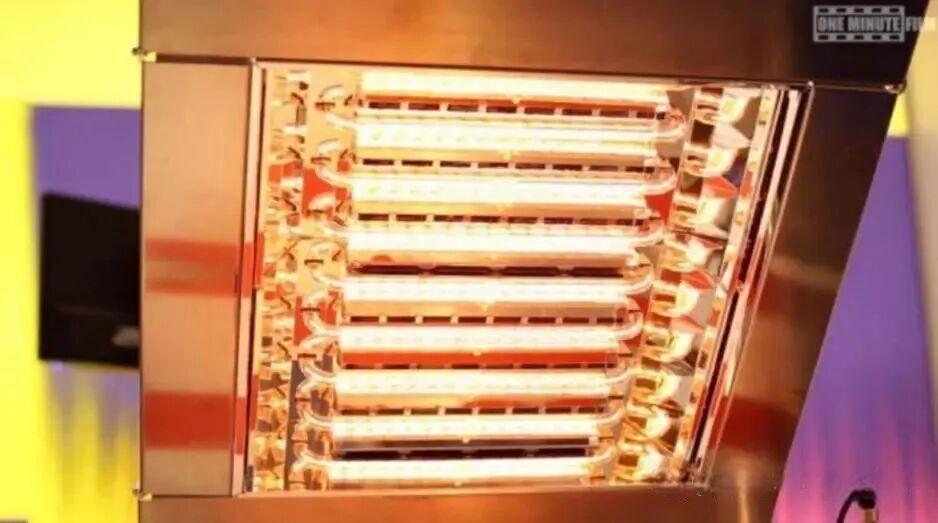
Near-Infrared (NIR) Drying (e.g., Kodak Prosper Systems)
Mid-infrared wavelengths (2.5–3.5 μm) penetrate the ink layer effectively.
- Power density: 15–25 kW/m²
- Drying time reduced to approximately 45 seconds (for PE film substrates)
This approach significantly enhances drying performance for non-absorbent materials.
4. Solutions to Common Drying Issues
Addition of Slow-Drying Agents
Controlled addition (<5%) can adjust drying speed.
However, stabilizers must also be added to maintain proper pH levels (8.5–9.5) to preserve ink stability.
Hybrid Drying Technologies
Combining drying methods improves efficiency, especially for non-absorbent substrates such as PET:
- IR + Hot Air (60–80°C)
- UV + Hot Air
These hybrid systems enhance drying efficiency and reduce residual moisture.
HP Pixel Control Technology Applied in Micolorprint Printers
I. Core Technical Definition
HP Pixel Control is a pixel-level color management technology developed by HP for professional printing applications.
Through a fully digital workflow, it analyzes and defines color composition at the individual pixel level, working in synergy with high-precision hardware architecture to deliver true “what you see is what you get” output.
At its core, the technology integrates advanced algorithms with hardware innovation to address key challenges in traditional printing—such as inconsistent color reproduction, high ink consumption, and loss of fine detail.
II. Core Technical Principles and Advantages
1. Pixel-Level Precision Color Control
Digital Color Analysis
Unlike traditional analog-based color separation logic, HP Pixel Control directly reads and defines the color parameters of each pixel. This ensures consistent output across different print batches and media types.
Color consistency deviation can be controlled to an average of <0.5 dE2000 (a professional-grade color accuracy standard).
Smooth Gradients and Expanded Color Gamut
By precisely controlling droplet combinations, the system achieves smooth color transitions and eliminates banding or graininess in gradient areas.
When combined with the RGB Vivid Photo ink system, it enables broader color gamut coverage and accurate reproduction of complex tones.
2. Efficiency and Cost Optimization
Streamlined Ink System
With pixel-level color blending capabilities, the ink system has been reduced from 12 inks in previous generations to 9 inks—achieving light-tone effects without additional light inks.
This directly lowers consumable procurement and replacement costs.
Faster Speed Without Compromising Quality
Working alongside HP High Definition Printheads (2400 nozzles per inch), print speeds increase by up to 46% compared to previous generations.
Certain models achieve speeds of up to 17.2 m²/hour on coated media while maintaining high image quality.
3. Image Quality Enhancement and Media Adaptability
Detail and Gloss Optimization
Equipped with Dual Drop Technology (7pl/3pl variable droplet sizes), the system combines different droplet volumes to reduce graininess while improving gloss uniformity.
This effectively resolves gloss differential issues on glossy substrates.
Full Media Compatibility
Through precise droplet control, ink penetration is minimized. Even on standard paper, near photo-quality output can be achieved without relying on expensive specialty coated media.
III. Technical Synergy and Application Scenarios
1. Key Supporting Technologies
Dual Drop Technology
As the hardware foundation of Pixel Control, high-definition printheads use dual-sized nozzles to balance fine detail reproduction (small droplets) with printing efficiency (large droplets).
Embedded Spectrophotometer
Real-time color calibration enables automatic generation of customized ICC profiles, further enhancing color accuracy and consistency.
2. Core Products and Application Scenarios
Flagship Models
HP DesignJet Z6 and Z9+ large-format printer series, supporting 24-inch to 64-inch output widths.
Target Applications
- Professional design studios (architectural drawings, product prototypes)
- Advertising production (high-precision posters and banners)
- Photographic output (fine art printing and exhibition prints)
These industries demand exceptional color fidelity and detail precision.
IV. Technological Evolution and Industry Value
HP Pixel Control can be regarded as a digital evolution of HP’s PhotoREt color layering technology.
While maintaining the image quality advantages of multi-drop layering, Pixel Control introduces pixel-level precision control that overcomes the limitations of traditional high-DPI approaches—such as slower speeds and higher ink consumption.
From an industry perspective, this technology redefines the balance between efficiency and quality, enabling large-format printing to move from “slow craftsmanship” to “high-efficiency premium output.”