
Application of HP Halftoning Algorithm in 8-Color Inkjet Systems
In 8-color inkjet systems, HP’s halftoning algorithm is one of the core technologies enabling accurate color output. The HP halftoning algorithm consists of a set of highly sophisticated computational rules, whose primary objective is to achieve precise color reproduction through the layered deposition of ink droplets based on color space principles.
In the actual printing workflow, the printer first receives image data transmitted from devices such as computers. These data contain rich color information. The HP halftoning algorithm is then activated to analyze each pixel of the image. Based on the characteristics of color spaces (such as the commonly used RGB or CMYK color spaces), it determines the required ink colors and droplet quantities for each pixel.
For example, when printing an image containing multiple colors, for a pixel representing a specific shade of orange, the HP halftoning algorithm performs complex calculations to determine the optimal ratio and quantity of magenta (M) and yellow (Y) inks to be layered in order to reproduce the desired color as accurately as possible. The algorithm also takes into account the optical properties of ink mixing, such as light absorption and reflection, ensuring precise final color output.
To achieve smoother color transitions, the HP halftoning algorithm employs specialized strategies. For instance, in handling light tonal transitions, the algorithm precisely controls the ejection volume and placement of light cyan (Lc) and light magenta (Lm) inks. By finely adjusting the distribution of these light-colored droplets, it avoids the “graininess” or “banding” effects that can occur in traditional four-color printing due to sparse CMY dot distribution. This results in smooth and natural tonal transitions from highlights to shadows.

In terms of black ink usage, the HP halftoning algorithm also plays a critical role. When printing black text or image areas, the algorithm intelligently determines whether to use pure black (K) ink alone or to combine it with other color inks, depending on the image content and the characteristics of the printing substrate. For example, when printing text on plain paper, black ink is typically prioritized to ensure clarity and sharpness. In contrast, when printing photographs, especially in dark areas, a small amount of other color inks may be blended with black to enrich shadow details and avoid the flat appearance caused by using only black ink.
Through precise analysis of image data and intelligent control of ink deposition, HP’s halftoning algorithm enables accurate color mixing and output in 8-color inkjet systems. This results in printed images with vivid colors, clear tonal gradation, and significantly enhanced overall print quality.
In-Depth Analysis of HP Edgeline Technology
1. Technical Background and Core Innovation
HP Edgeline technology was the first to introduce Scalable Printing into the wide-format printing field.
Architecture Design:
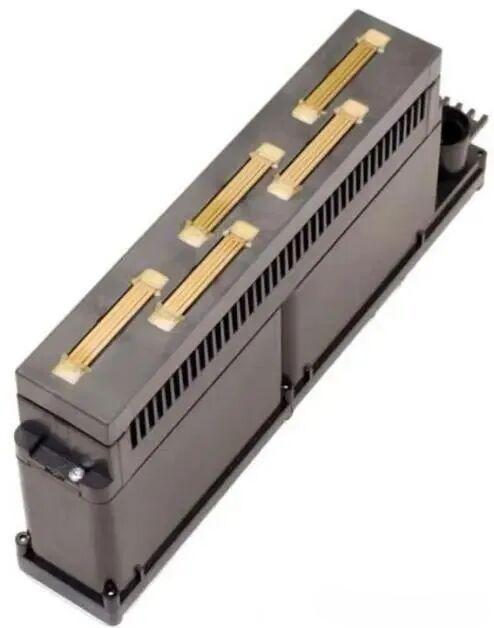
- 5-chip integration: Through multi-chip parallel processing, a high-density nozzle layout is achieved (1056 nozzles per two rows), significantly improving printing speed and accuracy.
- 1200 dpi resolution: Utilizing micro piezo printhead technology, droplet control precision reaches 1 picoliter (pL), making it suitable for high-precision applications such as engineering drawings and advertising posters.
2. Engineering Implementation and Performance Advantages
Scalable Printing Technology
- Dynamically adjusts the activation pattern of the nozzle array, enabling seamless scaling from A4 to A0+ formats without replacing the printhead.
- Maintains color consistency during high-speed printing through intelligent droplet compensation algorithms (ΔE < 2.0).
Nozzle Density and Efficiency
| Parameter | Conventional Technology | Edgeline Technology |
| Nozzle Density | 300–600 dpi | 1200 dpi |
| Nozzles per Chip | 256–512 | 1056 (dual-row) |
| Maximum Print Speed | 15 m²/h | 30 m²/h |
3. Industry Impact and Typical Applications
Industrial Applications
- Architectural blueprint printing (e.g., CAD drawings)
- Outdoor advertising (UV ink weather resistance up to 5 years)
- When combined with HP Latex technology, it enables environmentally friendly solvent-based printing, reducing VOC emissions by 90%
Technology Evolution
- Later models (e.g., Edgeline 8000) integrate automatic printhead cleaning systems, reducing failure rates by 70%
Note
Edgeline technology, through modular design and semiconductor manufacturing processes, has redefined the standards of precision and efficiency in industrial printing.