
Characteristics of Trident Printheads
Detailed Analysis of the Technical Features and Applications of Trident Printheads
1. Core Features
All-steel structural design:
The printhead can be disassembled and cleaned, offering strong durability and suitability for industrial high-load environments.
High flexibility:
For example, the 768Jet model supports replacing multiple printheads with a single unit, simplifying controller design and saving space.
Multi-channel control:
The 768Jet printhead features 256 controllable channels and 768 nozzles, enabling precise generation of text, graphics, and barcodes.

2. Technical Parameters
Print resolution:
Supports 4-inch wide-format printing, suitable for large-format applications such as advertising graphics.
Ink compatibility:
Must be used with TRIDENT dedicated inks (such as JetWrit and PostBrite) to ensure stability.
3. Typical Application Fields
Industrial marking:
Widely used in carton barcode printing (market share exceeding 90% in Japan).
Financial documents:
Bank check printing, postal marking, and other applications requiring highly reliable printheads.
Special materials:
Industrial applications such as LCD dot matrix printing and circuit board printing.
4. Structural Design and Material Innovation
1. Modular Replaceable Printhead
Adopts a quick plug-and-play interface design, supporting switching between different printing modes (such as high-precision/high-speed), adapting to diversified production requirements.
The printhead material may incorporate wear-resistant ceramic coatings or a full stainless steel structure to enhance corrosion resistance and service life (referencing Seiko SPT printhead design).
2. Precision Fluid Control Technology
Through multi-orifice matrix jetting, graded droplet control is achieved, balancing printing speed and precision.
May integrate an intelligent temperature control system to dynamically adjust printhead voltage in response to environmental temperature changes, reducing the risk of ink interruption.
5. Functional Optimization and Intelligence
1. Adaptive Printing Modes
Supports switching between 35PL and 12PL droplets, with a maximum resolution of up to 1440 DPI, meeting industrial-grade high-precision requirements (similar to Spectra printhead technology).
May introduce real-time monitoring to automatically calibrate printhead status and optimize ink jet trajectories.
2. Industrial-Level Compatibility
Printhead data interfaces are compatible with various printing software systems, reducing system integration complexity.
May adopt wide-format printing design (such as 75mm printhead width) to improve output efficiency per unit time.
III. Technical Comparison and Industry Applications
| Feature | Trident Printhead (Estimated) | Mainstream Printhead (e.g., Seiko SPT) |
| Durability | Wear-resistant materials + modular design | Full stainless steel structure |
| Precision | Adjustable 35PL–12PL | Fixed 35PL droplet |
| Application Scenario | Industrial / commercial printing | Primarily industrial printing |
Brother Printhead Technology Features: In-Depth Analysis
1. Core Technology Architecture: Ceramic Micro-Piezo System
Brother printheads, like Epson, utilize ceramic micro-piezo technology, which distinguishes them from HP and Canon’s thermal bubble solutions. Their core advantage lies in the room temperature operating mechanism:
- Working Principle: The printhead works by applying a voltage to the piezoelectric ceramic, which causes it to deform at room temperature and pressure, forcing the ink to form droplets. This avoids the chemical effects of high temperatures (300°C) associated with thermal inkjet technologies.
- Structural Design: Brother’s printheads are designed with a separation between the nozzle and ink cartridge, allowing for reuse of the printhead while only the ink cartridge needs to be replaced, significantly reducing long-term consumable costs.
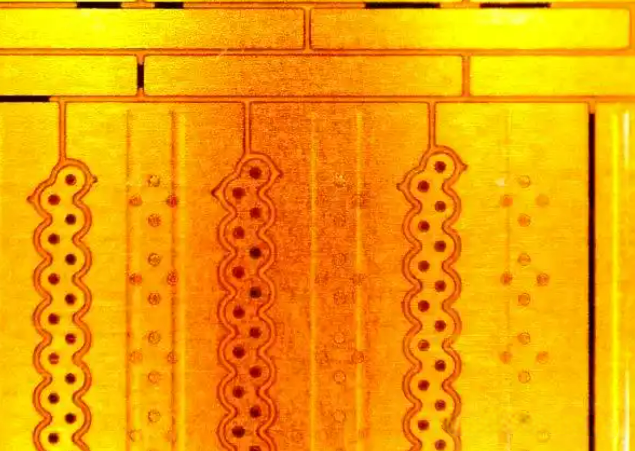
- Material Characteristics: Leveraging the ceramic technology developed in collaboration with Kyocera, the piezoelectric elements use ultra-thin ceramic substrates (as thin as 40μm), balancing deformation sensitivity and structural strength.
2. Three Key Core Technology Features
- High-Speed Printing: Breakthrough with Maxidrive Technology
Brother’s self-developed Maxidrive printhead achieves speed improvements through three innovations:- Microstructure Optimization: The thickness of the piezoelectric drive unit is reduced to 40μm, coupled with dynamic drive design, boosting ink droplet frequency by 50%.
- High-Density Nozzle Layout: Borrowing from KJ4 series technology, each printhead integrates 2656 nozzles with a pitch of just 0.042mm, achieving a physical resolution of 600dpi, ensuring both speed and precision.
- Intelligent Signal Processing: The new ASIC chip enables high-speed image processing and nozzle synchronization, reducing the first-page output time by more than 40%.
- Extended Durability: Industrial-Grade Lifespan Design
- Printhead Lifespan: Commercial models (such as the PJ-883) have a printhead lifespan of up to 100,000 pages (A4), three times longer than traditional models, supporting high-load continuous printing.
- Anti-Wear Technology: Improved waste ink control and reduced ink wear on components, along with the fatigue resistance of ceramic elements, effectively doubles the lifetime print volume.
- Environmental Adaptability: The stainless steel layered structure and built-in heater design allow for stable operation in complex temperature and humidity environments, making it suitable for industrial applications such as outdoor advertising and packaging printing.
- High Precision and Compatibility: Full-Scene Adaptability
- Ink Droplet Control Technology: Supports 3-4 variable ink droplet sizes (as small as a few microliters) and dynamically adjusts the voltage waveform to achieve 1200x1200dpi high-definition printing, with jagged edges eliminated.
- Ink Compatibility: Compatible with a wide range of inks, including solvent-based and aqueous inks, with a viscosity range of 1-20 mPa.s, suitable for printing on a variety of materials such as photos, glossy paper, and textiles.
- Smart Maintenance System: Works with original continuous ink systems (such as the 5009CMY series) for automatic clog detection and pulse cleaning, with ink residue controlled between 17%-25%, reducing waste.
3. Technology Comparison and Market Advantages
| Technology Dimension | Brother Micro-Piezo Technology | HP Thermal Inkjet Technology |
| Working Temperature | Room temperature and pressure | 300°C high temperature |
| Printhead Lifespan | About 100,000 pages | Replaced with ink cartridge (1-2 thousand pages) |
| Consumable Cost | Low (only replace the ink cartridge) | High (ink cartridge includes printhead) |
| Ink Compatibility | Wide (solvent/aqueous compatible) | Narrow (only low viscosity aqueous ink) |