
I. Mapping Between Motion System Error Sources and Printing Defects
1. Open-Loop Control Defects
Backlash and Belt Stretching:
In open-loop systems, the lack of position feedback allows elastic deformation of transmission components to cause printhead positioning errors (typically 0.1–0.5 mm displacement), resulting in dot overlap or gap banding. For example, belt stretching may cause the media feed distance to deviate by ±3% from the theoretical value, directly affecting multi-color registration accuracy.
Solution:
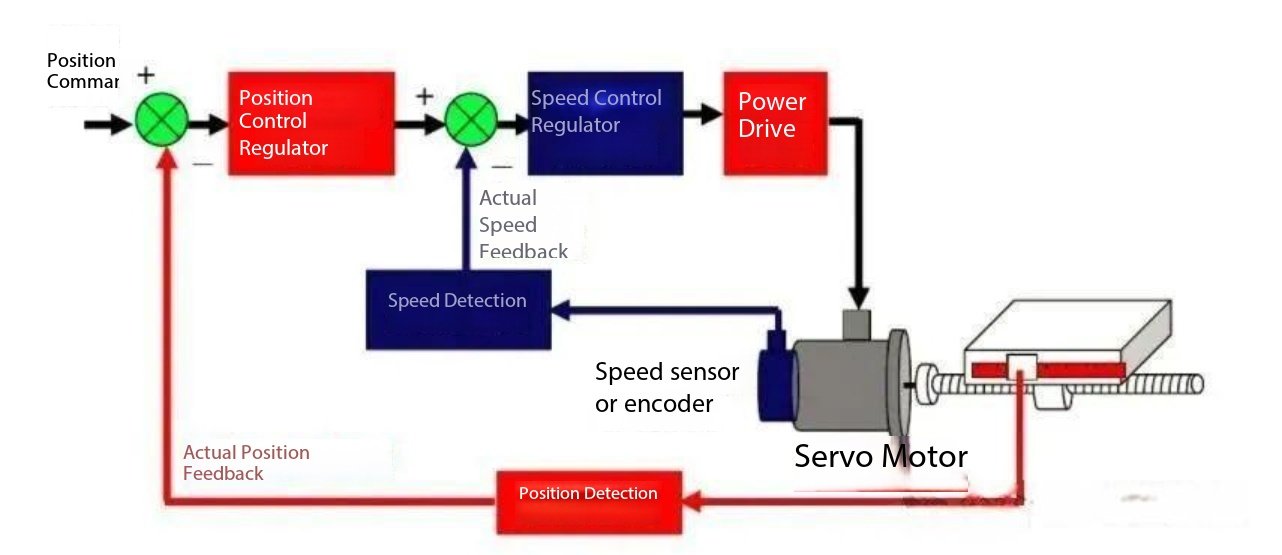
Adopting closed-loop servo control (e.g., permanent magnet synchronous motor vector control) can improve positioning accuracy to ±0.01 mm.
2. Encoder Resolution Limitations
Low-resolution encoders (e.g., 500 lines/rev) introduce angular displacement detection errors, resulting in ±1 pulse equivalent rounding errors. In high-precision printing applications (e.g., 1200 dpi), a single positioning error can reach ±25 μm, leading to periodic fluctuations in droplet placement.
Improvement Direction:
Using a 23-bit absolute encoder can increase the theoretical resolution to 0.0003°.
3. Dynamic Motion Disturbances
Speed Fluctuation:
Transport speed variations of ±5% can lead to flight time errors (e.g., droplet landing deviation up to 50 μm at 8 m/min).
Mechanical Noise:
Vibration frequencies above 100 Hz may cause slight printhead oscillations (amplitude approx. 3–10 μm), resulting in random ink misting.
Control Strategy:
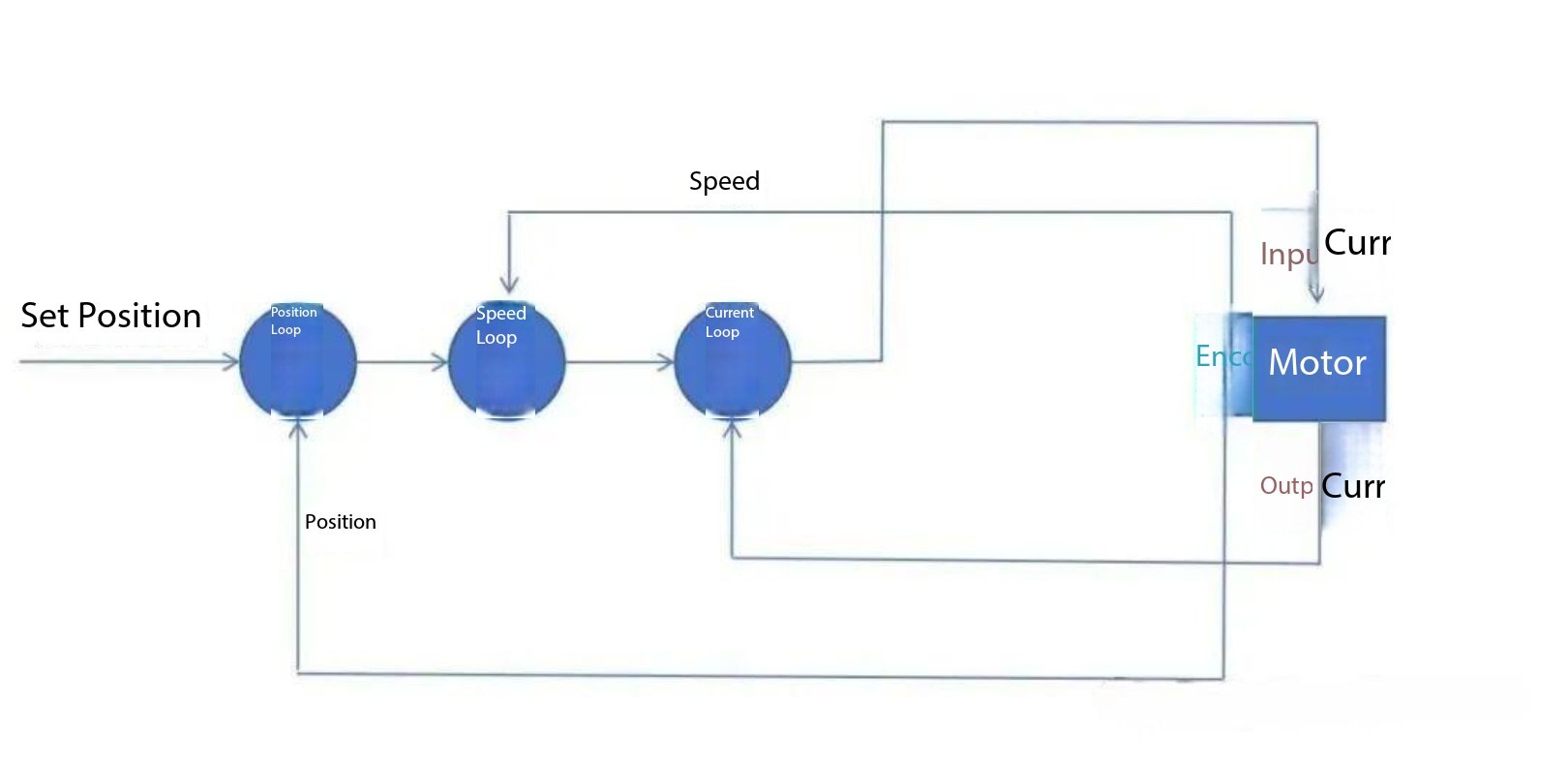
Three-loop control (current–speed–position) can reduce speed fluctuation to below 0.1%.
II. Key Influencing Factors of the Media Handling System
1. Media Feed Error
Stepper motor step loss or transmission backlash can cause deviations in media movement distance (typically ±0.2 mm), resulting in 0.1–0.3 mm color band misalignment during bidirectional printing.
Case Study:
After upgrading to a closed-loop media transport system, registration error can be reduced from 200 μm to 20 μm.
2. Substrate Deformation Effect
Uneven web tension can cause substrate stretching (e.g., PET film elongation of 0.5%), leading to actual print length being 1.2 mm/m longer than the design value.
Compensation Method:
Adopt real-time tension monitoring combined with servo-controlled unwind/rewind systems.
III. Dynamic Interaction Between Printhead and Media
1. Flight Time Error
A nozzle height variation of ±0.5 mm can cause droplet landing deviation (approx. ±40 μm at 5 m/s jetting speed). This error accumulates during bidirectional printing.
Optimization Solution:
Use laser distance sensors for closed-loop adjustment of printhead height.
2. Timing Synchronization Challenges
Microsecond-level deviations between transport speed and inkjet firing timing can cause longitudinal banding of 0.05–0.2 mm.
Technological Breakthrough:
FPGA-based hardware triggering can reduce timing error to within ±10 ns.
IV. System-Level Optimization Path
1. Control Architecture Upgrade
| Control Type | Positioning Accuracy | Speed Fluctuation | Cost Index |
| Open-loop stepper | ±0.5 mm | >5% | 1.0 |
| Semi-closed-loop servo | ±0.02 mm | 0.5%–1% | 2.5 |
| Full closed-loop linear motor | ±0.002 mm | <0.01% | 6.0 |
2. Multidisciplinary Optimization
- Mechanical: Replace gear transmission with harmonic reducers (backlash <1 arcmin)
- Algorithm: Apply feedforward compensation + adaptive filtering to suppress vibration
- Materials: Use carbon fiber guide modules to reduce thermal deformation effects