
Impact on UV Ink Printing Performance
Color Bleeding
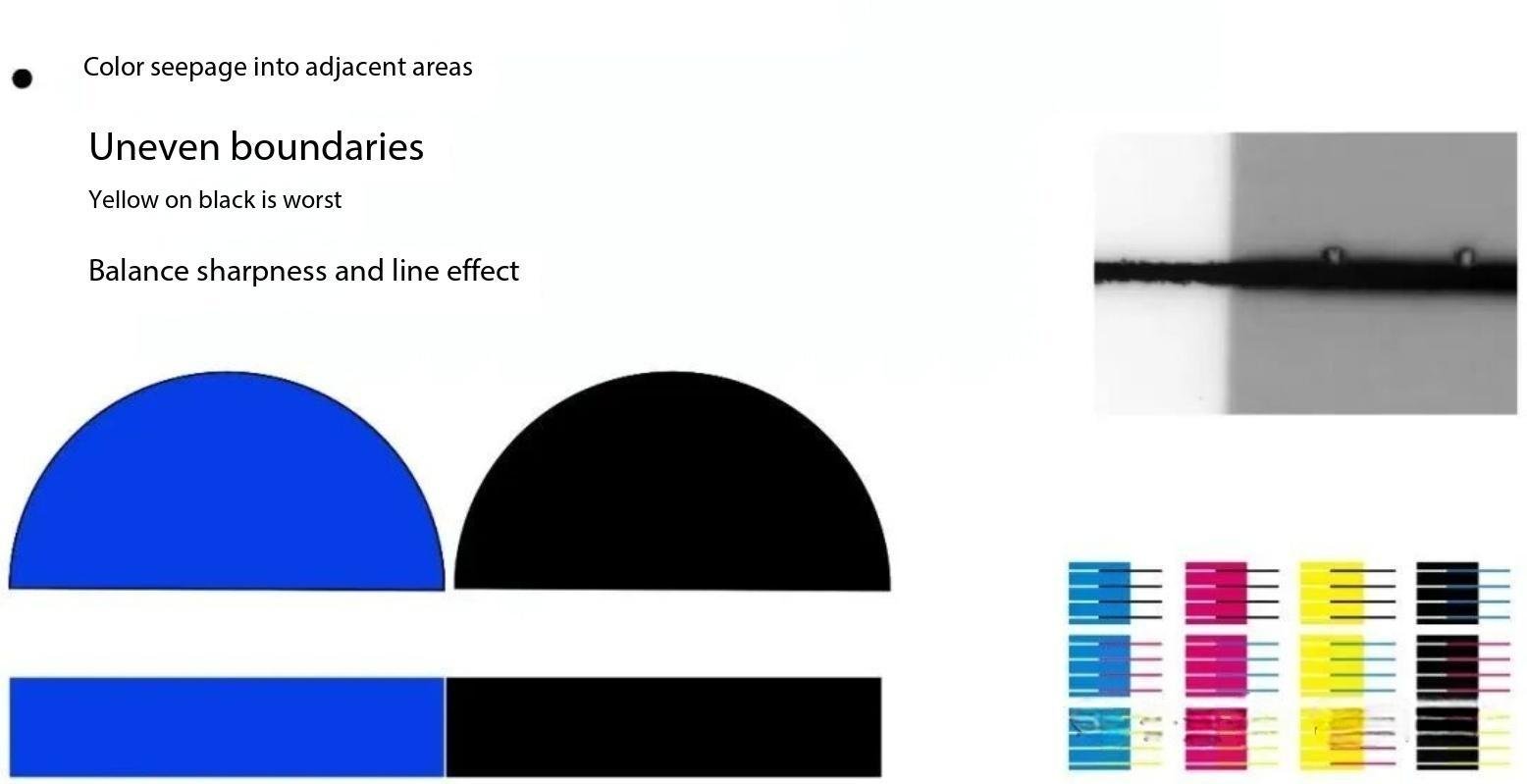
Multidimensional Factors Affecting UV Ink Printing Performance
I. Material System: The Determining Role of Ink Formulation
1. Photoinitiator Compatibility
- A 395nm wavelength requires TPO/ITX-type photoinitiators, while the 365nm band is best matched with 819-type initiators.
- Insufficient photoinitiator content (<3%) leads to incomplete curing, whereas excessive content (>10%) results in brittleness of the ink layer.
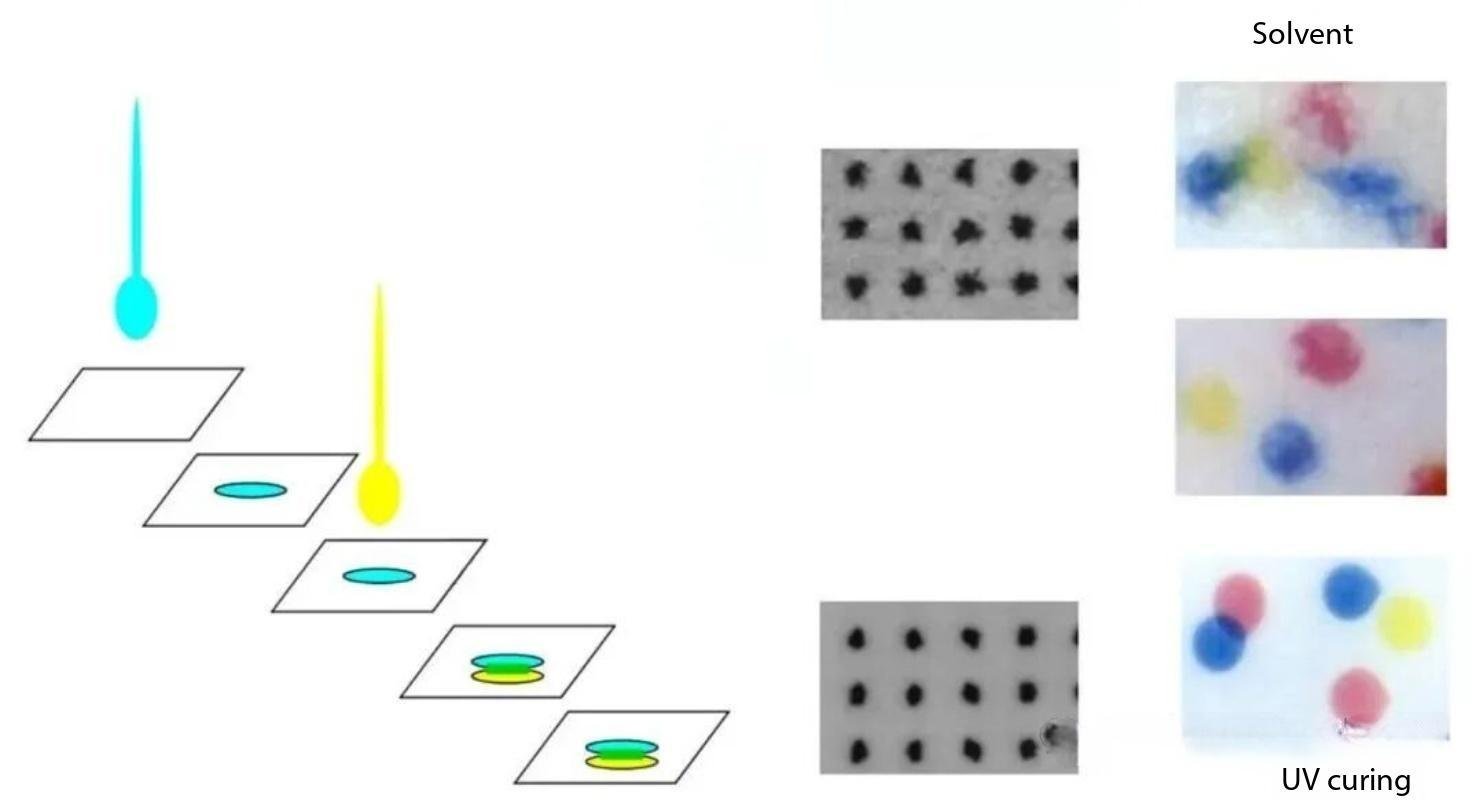
UV Ink Dot Quality
2. Resin–Monomer Synergistic Effect
- Epoxy acrylate provides hardness (suitable for metal/glass substrates), while polyurethane acrylate offers flexibility (for PET/PP substrates).
- The ratio of TPGDA to HDDA monomers affects viscosity (optimal range: 12–18 cP) and adhesion (must reach 3.8 × 10⁻² N/m).
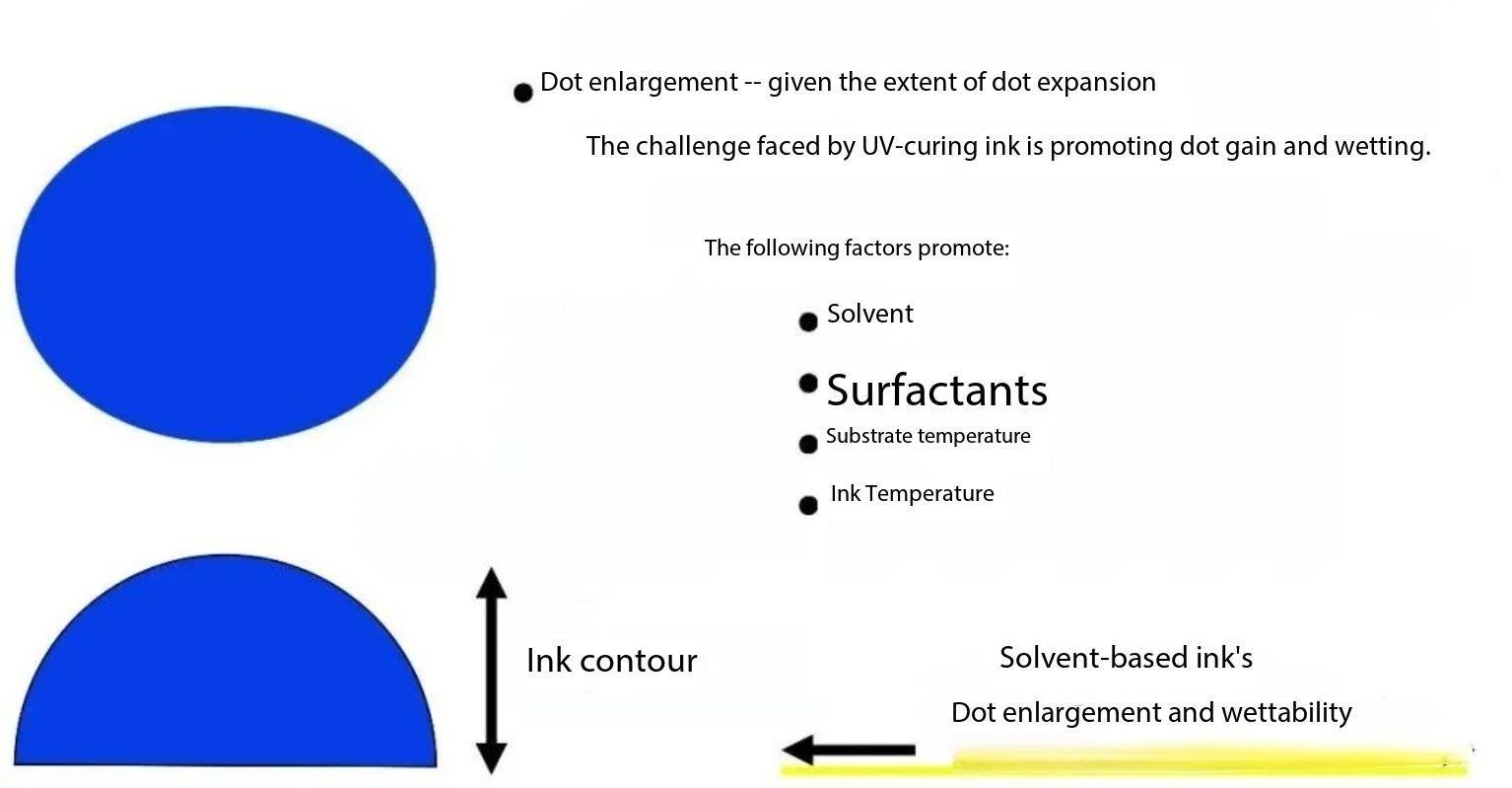
Dot Gain
II. Equipment Parameters: Dynamic Balance Between Precision and Energy
1. Printhead Technical Specifications
- A minimum droplet size of 3 pL combined with 1200 dpi resolution can achieve 5 μm line accuracy.
- Printhead height deviation >0.2 mm causes droplet trajectory offset (ideal value: 1.5 ± 0.1 mm).
2. Curing System Configuration
- Multi-band LED combinations (395nm + 365nm) improve curing efficiency by 40% compared to single-band systems.
- Energy density must be ≥800 mJ/cm². If power is insufficient, printing speed should be reduced to <30 m/min.
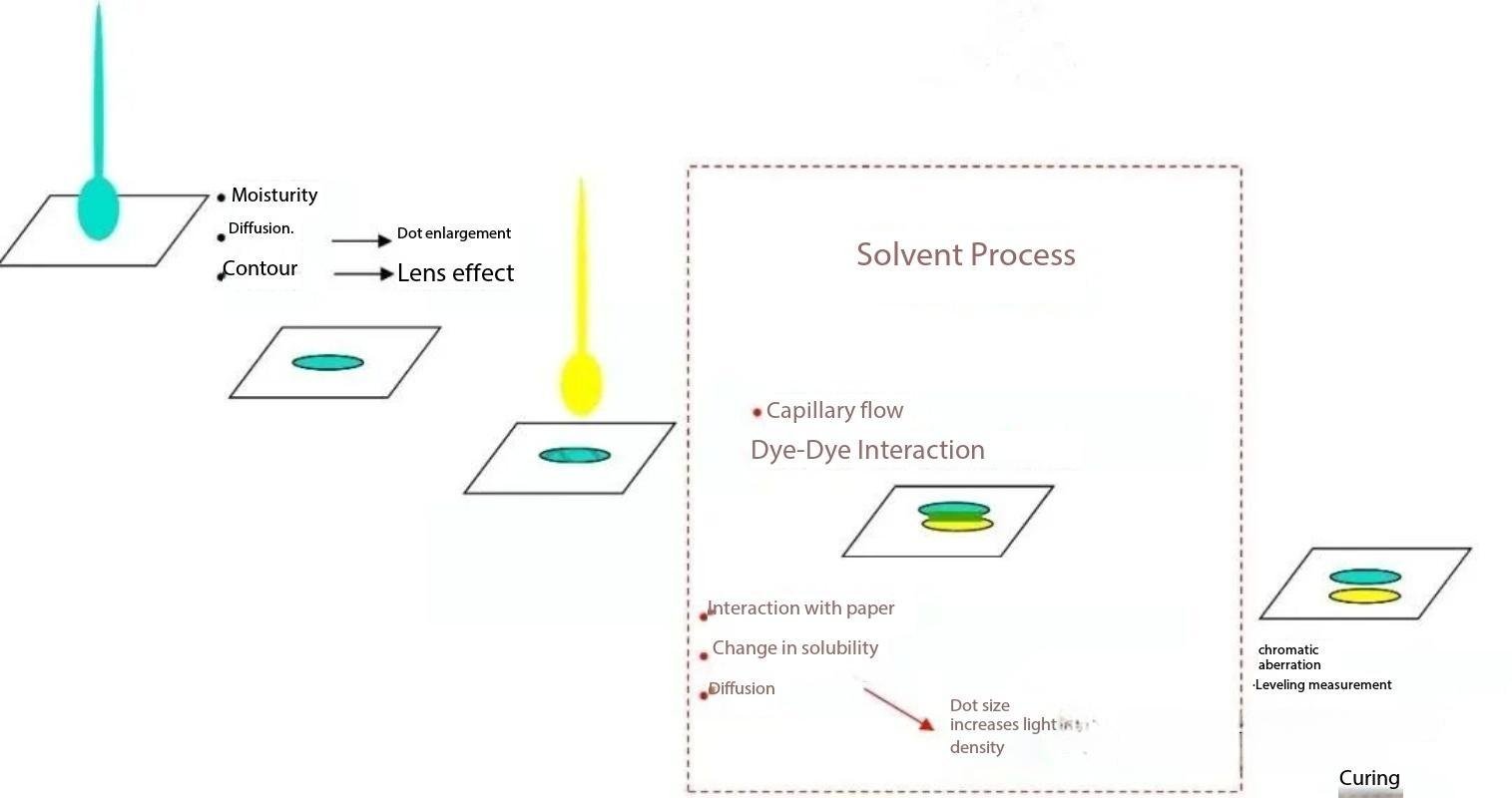
UV Curing Image Formation Process
III. Process Control: Precise Management of Environment and Operation
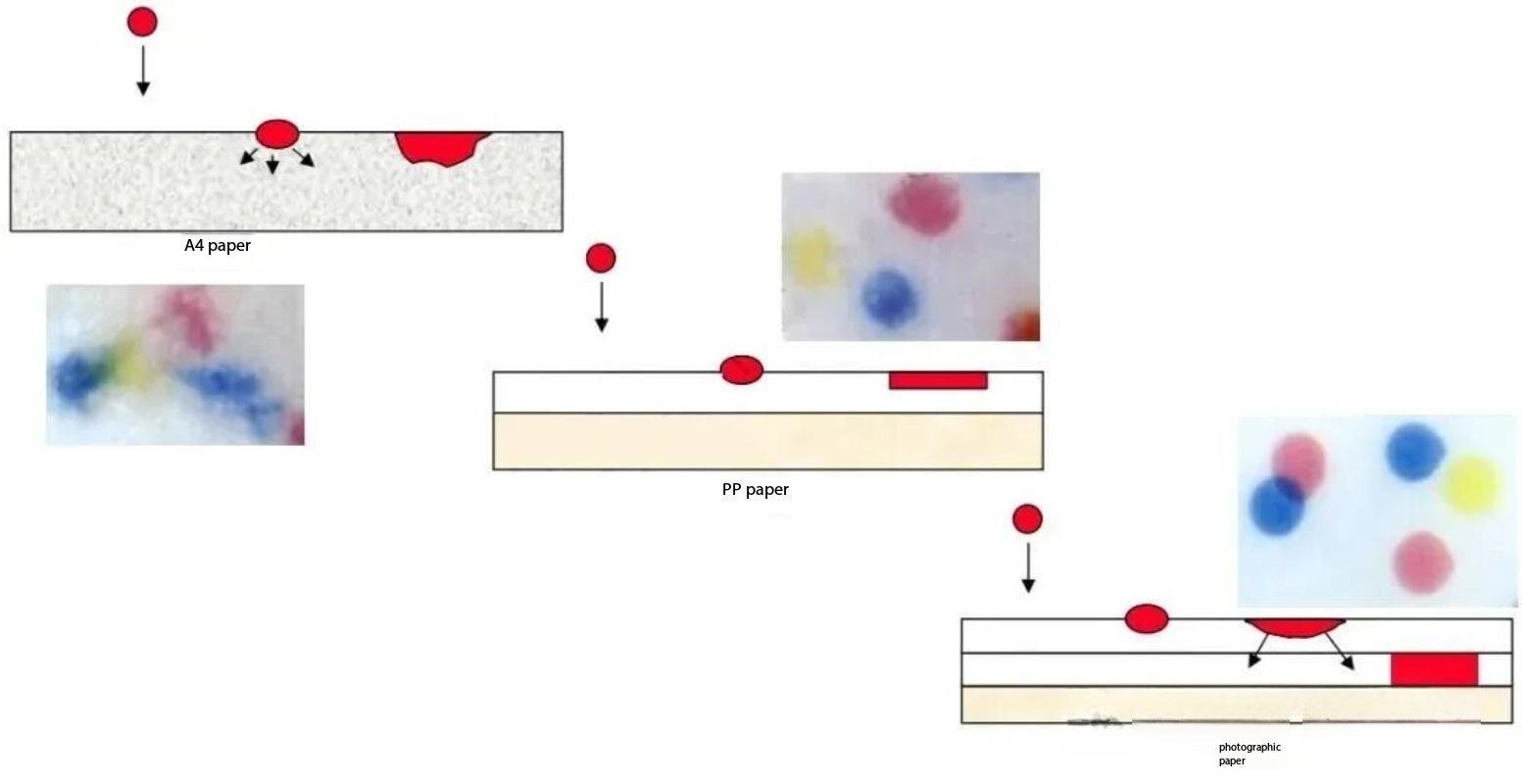
1. Substrate Compatibility
| Material Type | Pre-treatment Requirement | Typical Problem-Solving Method |
| Non-absorbent substrates | Plasma treatment (>50 dyne/cm) | Add 3% adhesion promoter |
| Porous materials | Dedicated primer (pore filling rate >90%) | Pre-coat with UV primer (film thickness 5–8 μm) |
2. Environmental Stability Control
- Temperature fluctuations >±3°C cause 10–15% changes in ink viscosity; constant temperature control (23 ± 2°C) is required.
- When humidity >70%, a dehumidification system must be activated to prevent surface condensation on substrates.
Comparison of Ink Droplet Formation on Different Materials
IV. Quality Verification System
1. Objective Evaluation Indicators
- Gray balance ΔE < 3.0 (ISO 12647-7 standard).
- Curing test: No peeling after 20 acetone rubs (ASTM D5402).
2. Process Monitoring Points
Ink storage → Printing parameter calibration → Substrate pre-treatment → Printing process monitoring → Curing strength testing → Finished product aging test
Each stage must record temperature, humidity, and UV intensity data to establish a traceable database.
Characteristics and Technical Analysis of UV Ink
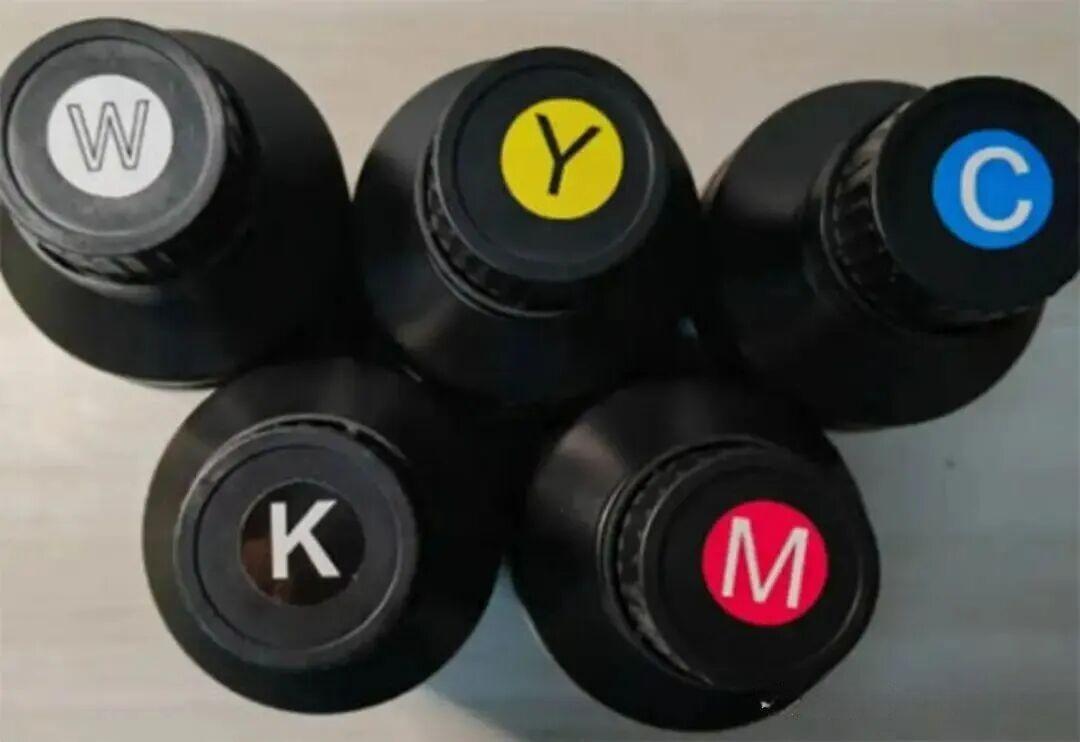
UV ink (UV-curable ink) is a special type of ink that cures through ultraviolet (UV) light initiation. Its performance characteristics and application features can be analyzed from the following aspects:
1. High Image Quality and Durability
UV ink can produce high-resolution images on non-porous substrates (such as metal, glass, and plastic). After curing, the ink film exhibits high hardness and strong abrasion resistance, making it suitable for printed products that require long-term durability.
The curing process occurs when photoinitiators (such as TPO and ITX) absorb UV light at specific wavelengths, instantly forming a crosslinked polymer network. This ensures a dense ink layer with no residual solvents.
2. Curing Mechanism and Shrinkage Issues
Free Radical Curing:
Curing speed is fast (on the order of seconds), but the shrinkage rate is relatively high (5%–10%) due to the formation of covalent bonds between molecules, which leads to volumetric contraction. Nitrogen purging is often required to reduce oxygen inhibition and ensure complete curing.
Cationic Curing:
Curing speed is slower, but shrinkage is lower (1%–2%), and adhesion performance is superior. After initial curing, the reaction can continue through heat or light exposure (post-curing), further enhancing performance.
3. Materials and Safety Considerations
Cost and Composition:
UV ink components such as photoinitiators, oligomers (e.g., epoxy acrylates), and reactive monomers (e.g., TPGDA) are relatively expensive. Some monomers (such as styrene) may cause skin irritation.
Environmental Aspects:
UV inks contain no volatile solvents; however, attention must be paid to the potential toxicity of photoinitiators and reactive monomers.
4. Application Scenarios
High-Speed Printing:
Free radical systems are suitable for applications requiring rapid curing, such as packaging printing.
High-Precision Bonding:
Cationic systems are ideal for shrinkage-sensitive applications, such as optical devices or electronic components.
5. Technical Optimization Directions
Reducing Shrinkage:
This can be achieved by adopting hybrid curing systems (free radical + cationic) or adding expanding monomers (such as spiro-ortho esters).
Improving Safety:
Developing low-irritation monomers (such as neopentyl glycol diacrylate) or using high-molecular-weight reactive diluents can enhance safety performance.
In summary, selecting UV ink requires balancing curing speed, shrinkage rate, adhesion, and cost. Different application scenarios demand appropriately matched formulations.