
Technical Analysis of Solvent-Based Inks
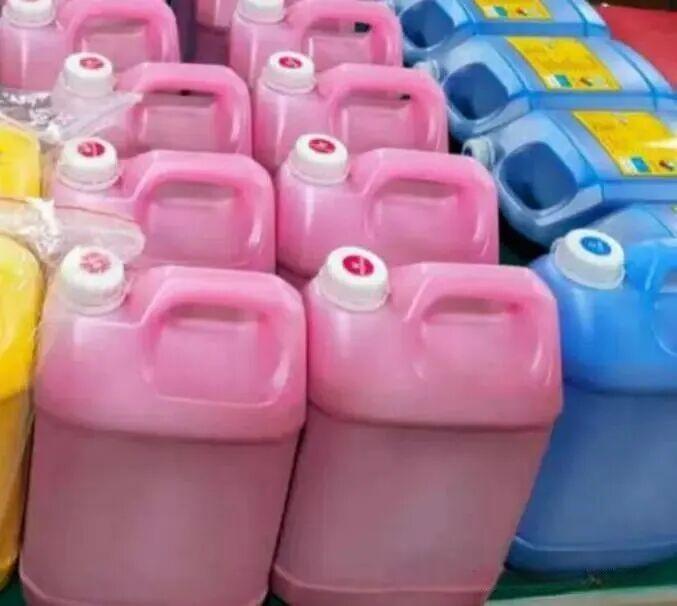
1. Substrate Compatibility and Printing Technology
Application on Non-Porous Substrates:
Specifically designed for non-absorbent materials such as vinyl sheets, plastics, metals, and glass. High-precision printing is achieved through piezoelectric technology (e.g., EPSON PrecisionCore) or continuous inkjet systems (e.g., HP Thermal Inkjet), with droplet volumes controllable within 1–3 pl.
Adhesion Optimization:
Modified chlorinated polypropylene resins (peel strength ≥4.5N/15mm) or plasma pre-treatment technologies (surface tension increased to 50 dyn/cm) are used to ensure strong adhesion on low-surface-energy substrates.
2. Solvent Systems and Environmental Challenges
Traditional Solvents:
MEK (Methyl Ethyl Ketone), alcohols (such as isopropanol), and ethylene glycol lactate require extraction systems (VOCs removal rate ≥90%). However, they present flammability risks (flash point <23°C) and transportation/storage hazards.
Eco-Solvents:
Low-odor alternatives (e.g., ethyl lactate, odor threshold >1000 ppm) help reduce workplace exposure risks, but require balancing drying speed (typically extended by 20–30%) and nozzle lifespan.
3. Drying and Odor Control
Drying Speed Balance:
By adjusting the solvent evaporation gradient (e.g., combining fast-drying and slow-drying solvents), a balance can be achieved between surface drying (5–10 seconds) and complete curing (30–60 minutes), preventing “false drying” or “skin formation.”
Odor Residue Control:
Molecular sieve adsorption (VOCs residue <0.1 ppm) or high-temperature degassing processes (80°C for 30 minutes) can reduce residual odor, although complete elimination of image odor may still require several hours.
4. Safety and Regulatory Compliance
Transportation and Storage:
Must comply with UN 1263 hazardous material transport standards. Storage requires explosion-proof cabinets (e.g., FM-certified) and inert gas protection (nitrogen concentration >95%).
Environmental Regulations:
The EU REACH regulation restricts MEK content (<5%), promoting the adoption of water-based or UV-curable alternatives (reducing VOCs by up to 92%).
Inkjet Printing and Nanotechnology
Comparative Analysis of Inkjet Printing Technology and Nanotechnology
1. Inkjet Printing Technology
Inkjet printing forms images by directly ejecting ink onto a substrate (such as paper). Its core characteristics include:
Substrate limitations: Absorbent substrates (such as paper) are required to absorb the ink and prevent image spreading.
High drying energy consumption: Wet images require significant energy to evaporate solvents (such as water) or UV curing; otherwise, nozzle clogging or reduced precision may occur.
Limited coverage area: Due to the movement range of the printhead and ink spreading characteristics, achieving large-area continuous printing is difficult.
2. Applications of Nanotechnology
Nanotechnology significantly enhances inkjet printing performance by optimizing materials (such as nanoparticles and graphene) and processes (such as combining inkjet printing with photonic sintering):
Optimized ink formulations: Nano-scale pigment particles (such as carbon black and graphene) improve ink stability and electrical conductivity, making them suitable for precision applications such as flexible sensors.
Compatibility with non-absorbent substrates: Nanocomposite materials (such as PDMS) enable ink adhesion through surface treatment, expanding compatibility to substrates such as plastics and metals.
Low-energy drying: Photonic sintering technology using nanomaterials allows ink curing at lower temperatures, reducing energy consumption.
3. Technical Comparison and Synergistic Effects
| Feature | Traditional Inkjet Printing | Nanotechnology-Enhanced Inkjet Printing |
| Substrate compatibility | Only absorbent substrates (e.g., paper) | Any substrate (e.g., flexible PDMS) |
| Drying energy consumption | High (requires solvent evaporation) | Low (photonic sintering / UV curing) |
| Coverage area | Limited (restricted by printhead movement) | Unlimited (continuous printing possible) |
| Application scenarios | Document printing, simple graphics | Flexible electronics, bioprinting |
4. Future Trends
The integration of nanotechnology and inkjet printing is driving the following innovations:
Bioprinting: Nano-scale droplet control (such as silk protein inks) enables precise cell deposition.
OLED displays: Nano-scale RGB ink deposition improves pixel precision and manufacturing yield.
Smart packaging: Integration of nanosensors into inkjet-printed labels enables temperature monitoring and intelligent tracking.
Through the synergy between nanomaterials and inkjet processes, the limitations of traditional inkjet printing are being overcome, opening new pathways for high-precision, low-energy industrial applications.
Inkjet Printing vs Nanotechnology (Summary Comparison)
Inkjet Printing
- Ink is directly sprayed onto the substrate (such as paper)
• Wet images penetrate the substrate
• Requires absorbent substrates
• Requires high energy for drying
• Limited coverage area

Nanotechnology-Based Printing
- Ink is deposited onto an intermediate surface (such as a blanket or transfer layer)
• Dried images are transferred to the final substrate
• Can be applied to virtually any substrate
• Requires less energy for drying
• Enables unlimited or large-area continuous coverage
