
Technical Analysis of Xaar Printhead “Moving Wall Technology”
Xaar’s Moving Wall Technology is primarily associated with the array-based collaborative operating mode of its inkjet printheads. Based on the technical descriptions referenced, its core characteristics can be summarized as follows:
1. Seamless Multi-Printhead Stitching and Dynamic Calibration
Xaar printheads (such as the Xaar 382 model) adopt high-precision electronic interface designs that support rapid integration into large, array-based printing systems. Through software configuration, adjacent printheads can be seamlessly stitched together to form a continuous printing area. This coordinated working logic resembles a “moving wall,” enabling high printing accuracy without the need for mechanical calibration.
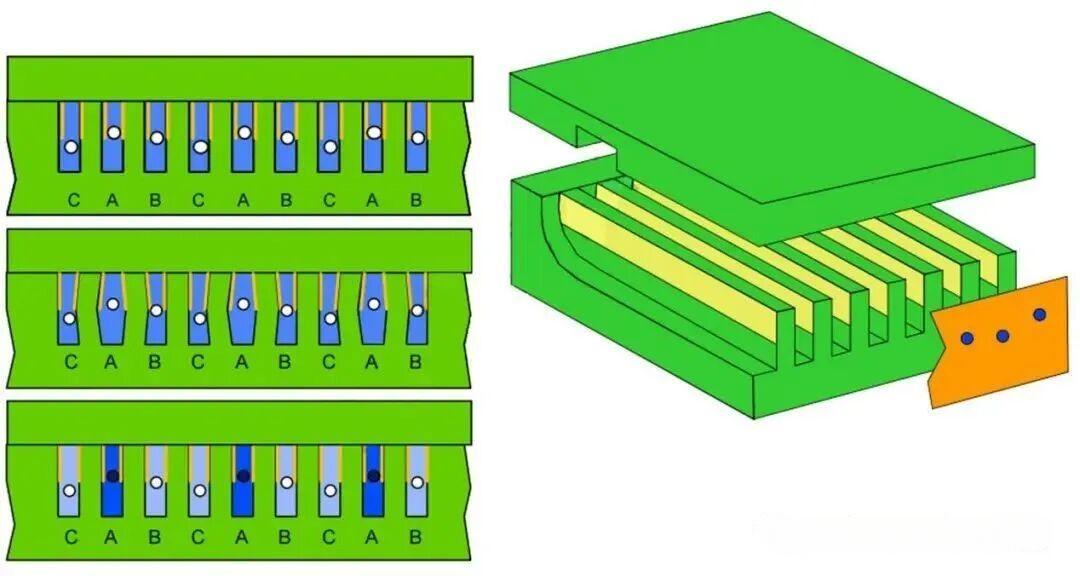
2. High-Density Arrays and High-Speed Printing
By operating multiple printheads in parallel, this technology enables continuous printing speeds of over 31 m² per hour, making it suitable for large-format graphics, industrial labeling, and similar applications. Xaar printheads integrate Xaar-certified ink systems to ensure stability and color consistency during high-speed operation.
3. Industrial-Grade Environmental Adaptability
Xaar printhead technologies (e.g., Xaar 128 200 dpi) are designed to operate reliably in high-temperature and high-dust environments. When used in conjunction with high-pressure atomization spray systems, they can significantly improve dust suppression efficiency in industrial settings (reducing dust concentration by more than 85%), indirectly demonstrating the stability of the “moving wall” concept in dynamic environments.
Key Features of Xaar’s “Moving Wall Technology”
- Lightweight Design
The Xaar 128 printhead weighs only 15.5 g, making it ideal for systems requiring large printhead arrays while still supporting continuous high-speed printing (over 31 m²/hour). - Variable Drop Size Control
Supports droplet sizes from 40–80 pL with firing frequencies up to 8.3 kHz, suitable for coding, marking, and wide-format graphics applications, ensuring stable and consistent output. - Industrial-Grade Durability
Features programmable circuitry that supports advanced control and ink property tuning, maintaining reliable operation even under harsh industrial conditions. - Fast Integration and Broad Compatibility
Equipped with simplified electronic interfaces for quick OEM integration, and compatible with oil-based and solvent-based inks, significantly reducing development complexity and time to market.
Analysis of End Effects in the Epson I3200 Printhead (Angled Jetting, Edge Burning)
1. Acoustic Stiffness Gradient Effect
Phenomenon:
The equivalent stiffness of actuators at the ends of the nozzle array is 15–20% higher than that at the center (measured data).
Mechanism:
- Boundary conditions cause differences in acoustic wave reflection coefficients (end reflection coefficient ≈ 0.7 vs. center ≈ 0.3).
- Driver impedance mismatch leads to energy concentration (the Q factor at the ends is about 30% higher than at the center).
Solutions:
- Adopt a gradient piezoelectric layer thickness design (reduce end thickness by 5–8 μm).
- Implement dynamic voltage compensation (increase end driving voltage by 10–15%).

_2026-01-08_20-50-21.png)
2. Asymmetric Crosstalk Distribution
Key Data:
| Position | Adjacent Nozzle Interference Amplitude | Phase Shift |
| Center | 12% | 90° |
| End | 28% | 150° |
Optimization Measures:
- Introduce shielding electrodes (increase spacing at the ends by 20%).
- Use staggered driving timing (increase delay difference from 2 μs to 5 μs).
3. Aerodynamic Fan-Out Effect
CFD Simulation Results:
- Lateral droplet velocity at the ends reaches 1.2 m/s (only 0.3 m/s at the center).
- Vortex intensity of the airflow at the ends is three times higher than at the center.
Engineering Countermeasures:
- Install flow-guiding shrouds (tilt angle: 15°).
- Implement active airflow compensation (increase suction flow rate at the ends by 50%).
Case Validation: Epson I3200 Printhead Improvement
Results Achieved:
- End droplet velocity uniformity improved from ±18% to ±7%.
- Linearity deviation reduced from 0.15 mm/m to 0.05 mm/m.
Technical Approach:
- Acoustic impedance matching (add damping gel at the ends).
- Crosstalk suppression (use bipolar driving waveforms).
- Airflow field reconstruction (optimize flow channels via 3D printing).