
Technical Characteristics of Pigment Inks
Analysis of the Technical Characteristics and Challenges of Pigment Inks
1. Performance Comparison Between Pigments and Dyes
Lightfastness and Water Resistance:
Pigments (such as TiO₂ and carbon black) form dense films through bonding between pigment particles and resins, resulting in significantly superior lightfastness (Blue Wool Scale 4–6) and water resistance compared to dyes (e.g., Cyanine 3). However, due to the relatively low chemical activity of pigment particles (typically 50–200 nm), color saturation (ΔE) is generally 10–20% lower than that of dye-based inks.
Particle Size and Nozzle Compatibility:
Pigment particles must be much smaller than the nozzle diameter of inkjet printheads (e.g., 20–50 μm for piezoelectric nozzles). However, nanoscale particles (e.g., 20 nm TiO₂) are prone to agglomeration due to van der Waals forces, requiring dispersants (such as polyacrylates) to maintain dispersion stability.
2. Key Issues in Inkjet Applications
Dispersion Stability:
Pigments must undergo high-shear dispersion processes (e.g., ball milling) to reduce oil absorption (e.g., TiO₂ oil absorption ≤ 20 g/100 g), combined with dispersants (such as BYK-110) to prevent sedimentation.
Drop Breakup and Nozzle Maintenance:
High-viscosity pigment inks (e.g., 100–200 mPa·s) require surface tension optimization (e.g., addition of 0.1% silicone additives) to improve droplet breakup. Nevertheless, long-term operation increases the risk of nozzle clogging, with failure rates approximately 30% higher than those of dye-based inks.
Drying Speed and Film Durability:
Pigment inks rely on resin crosslinking (e.g., polyurethane acrylates) for curing. Drying speed is slower than that of dye inks (e.g., UV curing requires 1–2 seconds), but once cured, abrasion resistance is significantly enhanced (Taber abrasion test ≥ 500 cycles).
3. Special Characteristics of White Ink on Transparent Substrates
TiO₂ Suspension Technology:
White inks require continuous circulation systems (e.g., magnetic stirrers) to prevent TiO₂ sedimentation (sedimentation rate ≤ 0.1 mm/h), combined with thixotropic agents (such as fumed silica) to maintain thixotropic behavior.
Optical Performance:
TiO₂ concentration should be controlled within 15–25% to balance opacity (optical density > 1.5) and light transmittance (> 80%). Excessive pigment loading may cause substrate haze.
4. Technical Optimization Directions
Nanocomposite Technologies:
Core–shell structured pigments (e.g., SiO₂@TiO₂) can improve dispersion stability and reduce nozzle wear.
Intelligent Dispersion Systems:
Dynamic adjustment of dispersant dosage through online viscosity monitoring (e.g., rotational viscometers) enables improved process control and long-term ink stability.
Comprehensive Analysis of Pigment Inks
The following is a comprehensive analysis of pigment inks, covering their composition, applications, and technical characteristics:
1. Classification and Mainstream Applications of Pigment Inks
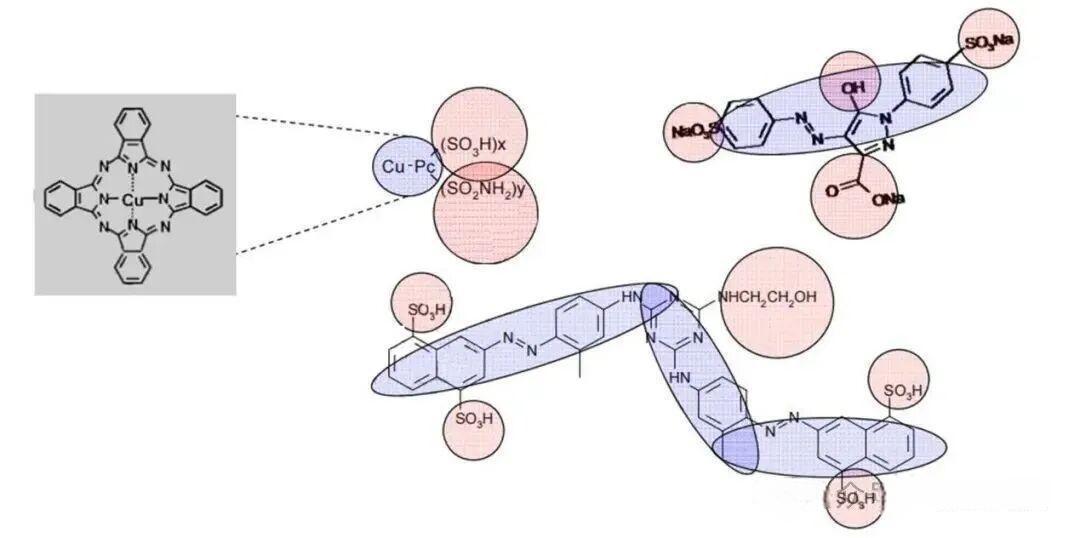
Organic Pigments: Widely used in desktop printing and wide-format printing due to their vibrant colors and good dispersibility, making them suitable for high-precision inkjet technologies. For example, phthalocyanine-based dyes perform excellently in inks, with strong weather resistance and high adhesion.
Inorganic Pigments: Such as iron oxide (Fe₂O₃) and titanium dioxide (TiO₂), are often used in ceramics, metal oxide coatings, and industrial printing due to their high-temperature and chemical corrosion resistance. Lanthanide-based pigments (such as cobalt blue) maintain stability at high temperatures.
2. Particle Size and Performance Optimization
Large Particle Trend: Increasing pigment particle size can enhance opacity and lightfastness, but stability in dispersion must be balanced. For example, titanium dioxide achieves optimized particle size through nanotechnology, resulting in a threefold increase in opacity.
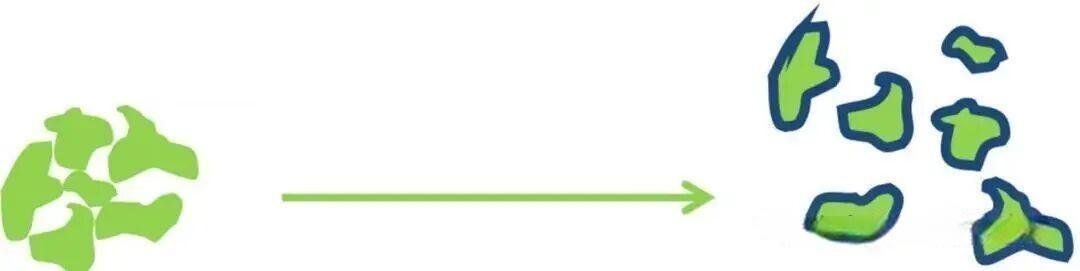
Dispersion Challenges: Inorganic particles (e.g., iron oxide) have high density and tend to settle, requiring surface modification (e.g., introducing polar groups) or the use of matching dispersants (e.g., high molecular weight polymers) to prevent flocculation.
3. Surface Chemistry and Dispersant Selection
Surface Polarity Differences: The polarity of pigments directly affects dispersion efficiency. Organic pigments (e.g., azo dyes) can adjust polarity through conjugated systems, while inorganic pigments (e.g., TiO₂) rely on surface coatings (e.g., silane coupling agents) to enhance compatibility.
Dispersant Matching:
- Small Organic Pigments: Anionic dispersants (e.g., polyacrylate salts) are commonly used.
- Large Inorganic Pigments: Require high shear force dispersion (e.g., three-roll mills) or non-ionic dispersants (e.g., polyvinylpyrrolidone).
4. Insoluble Dyes and Rigid Molecular Structures
Conjugated Molecular Characteristics: Azo-type dispersing dyes, due to their rigid conjugated structure (e.g., -N=N-), exhibit high colorfastness, but molecular weight must be adjusted (e.g., by introducing benzene rings) to balance solubility and sublimation fastness.
Insoluble Dye Applications: Pigment-based dyes (dye precipitates) are used in printing inks and require binding agents (e.g., phenolic resins) to ensure film formation.
5. Future Trends
Environmental and High Performance: The next generation of pigment inks is moving towards low-toxicity, water-based formulations (e.g., soy oil-based binders), while also improving dispersion stability of inorganic pigments through nanotechnology.
A Comprehensive Analysis of the Development of Pigment Dispersion Technology
The following is a comprehensive analysis of the development of pigment dispersion technology, integrating key advances in pigment composition, dispersant optimization, and inkjet applications:
1. Pigment Composition and Particle Size Control
Nano-scale pigments:
Modern pigment dispersion technology is trending toward nanoscale pigments (e.g., 20–50 nm titanium dioxide). Achieving uniform particle size and preventing agglomeration requires high-shear grinding processes such as bead milling.
Surface modification:
Inorganic pigments (e.g., iron oxides) are often treated with silane coupling agents to reduce surface polarity, thereby improving dispersibility in non-polar media such as hydrocarbon resins.
2. Dispersant Design and Performance Optimization
Solubility matching:
Dispersants must be compatible with the polarity of the carrier solvent (e.g., sodium polyacrylate for water-based systems, hyperbranched polymers for oil-based systems).
Dosage control:
The recommended dispersant dosage is typically 0.1%–1.5% of the pigment weight. Excessive addition may lead to increased viscosity or color floating.
Stability enhancement:
Superdispersants (e.g., ANJEKA-6042A) suppress pigment sedimentation through multipoint anchoring and long solvated chains, significantly extending storage stability.
3. Challenges and Solutions in Inkjet Inks
Jetting stability:
Synergistic control of low viscosity (<10 mPa·s) and surface tension (25–40 mN/m) is essential to reduce misting and satellite droplets.
Aging resistance:
The addition of antioxidants (e.g., BHT) and UV stabilizers (e.g., benzotriazole derivatives) helps delay pigment oxidation and fading.
Characterization techniques:
Dynamic light scattering (DLS) and zeta potential analysis are widely used to evaluate dispersion stability.
4. Process and Equipment Innovations
Grinding processes:
Nano-scale pigments require high-energy milling (e.g., sand mills operating at >2000 rpm), combined with cooling systems to prevent thermal degradation.
Inkjet compatibility:
Low-polarity ceramic inks require dedicated dispersants (e.g., ANJEKA-6042A) to maintain Newtonian fluid behavior and ensure stable jetting.
Key Conclusions
Pigment dispersion technology is evolving toward high-solid formulations, low-VOC systems, and intelligent solutions (such as stimuli-responsive dispersants). Future breakthroughs will need to address the long-term stability of nano-scale pigments and their compatibility with inkjet printing processes.