
Technical Characteristics of Pigment Inks
Technical Characteristics and Challenges of Pigment Inks
1. Performance Comparison Between Pigments and Dyes
Lightfastness and Water Resistance:
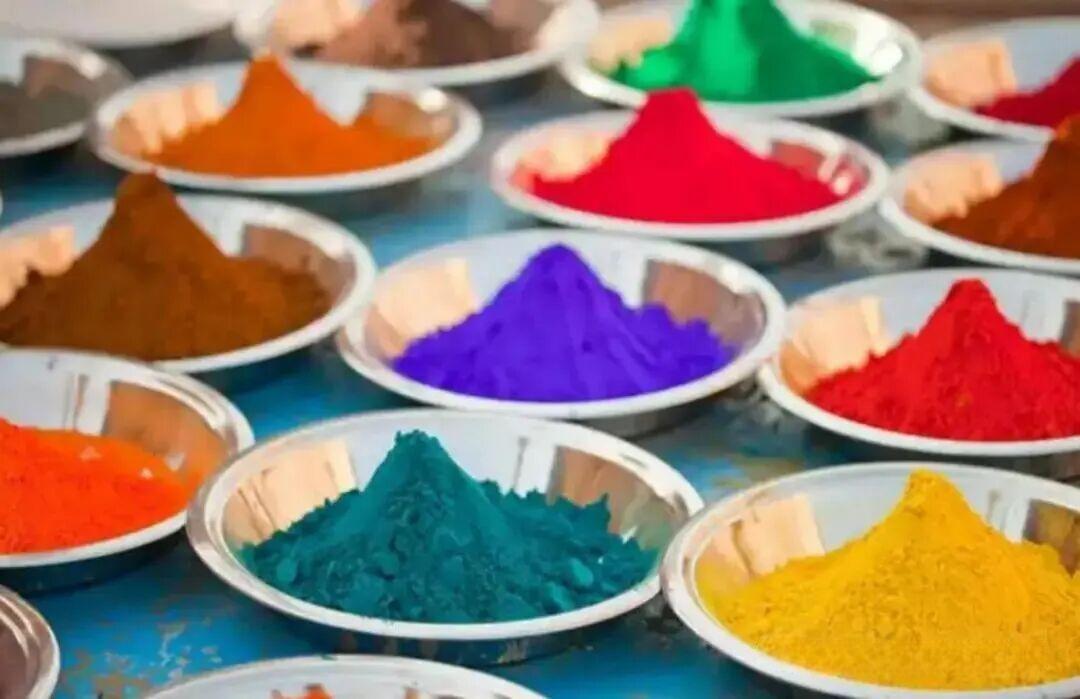
Pigments (such as TiO₂ and carbon black) form a dense film by bonding with resins on the particle surface, resulting in significantly better lightfastness (Blue Wool rating 4–6) and water resistance compared to dyes (such as Cyanine 3). However, pigment particles (typically 50–200 nm) have relatively low chemical activity, leading to 10%–20% lower color saturation (ΔE) compared to dyes.
Particle Size and Nozzle Compatibility:
Pigment particles must be significantly smaller than the nozzle orifice diameter (e.g., 20–50 μm for piezo printheads). However, nanoscale particles (e.g., TiO₂ at 20 nm) are prone to agglomeration due to van der Waals forces, requiring dispersants (such as polyacrylates) to maintain stability.
2. Key Issues in Inkjet Applications
Dispersion Stability:
Pigments must undergo high-shear dispersion (e.g., via ball milling) to reduce oil absorption (e.g., TiO₂ oil absorption ≤ 20 g/100 g). Dispersants (such as BYK-110) are added to prevent sedimentation.
Drop Formation and Nozzle Maintenance:
High-viscosity pigment inks (e.g., 100–200 mPa·s) require optimized surface tension (e.g., adding 0.1% silicone additives) to improve drop break-off performance. However, long-term use still tends to cause nozzle clogging, with a failure rate approximately 30% higher than that of dye-based inks.
Drying Speed and Film Strength:
Pigment inks rely on resin crosslinking (such as polyurethane acrylates) for curing. Their drying speed is slower than that of dyes (e.g., UV curing requires 1–2 seconds), but after film formation, abrasion resistance (Taber test ≥ 500 cycles) is significantly improved.
3. Special Characteristics of White Ink for Transparent Substrates
TiO₂ Suspension Technology:
White ink requires a circulation system (such as a magnetic stirrer) to prevent TiO₂ sedimentation (sedimentation rate ≤ 0.1 mm/h), along with thixotropic agents (such as fumed silica) to maintain thixotropy.
Optical Properties:
The TiO₂ concentration must be controlled within 15%–25% to balance opacity (OD > 1.5) and light transmittance (> 80%). Excessive concentration may cause substrate hazing.
4. Directions for Technical Optimization
Nanocomposite Technology:
Core–shell structured pigments (e.g., SiO₂@TiO₂) can improve dispersion stability and reduce nozzle wear.
Intelligent Dispersion Systems:
Dynamic adjustment of dispersant dosage through online viscosity monitoring (e.g., using a rotational viscometer).
Phase Change Ink Technology Analysis
1. Definition and Fundamental Characteristics
Phase Change Inks (PCI) are inks that undergo physical state transitions (solid/liquid) through temperature variation. They are primarily used in inkjet printing systems (such as hot-melt inkjet technology). Their core characteristics include:
- Temperature Dependency: The ink is jettable within a specific temperature range (e.g., 60–125°C) and remains solid below its melting point (e.g., 56°C).
- Low Viscosity Range: At jetting temperature, viscosity typically ranges from 4–50 mPa·s; after cooling, viscosity increases significantly (e.g., 10–10⁴ mPa·s).
- Suitability for Indirect Printing: The ink can be transferred to the final substrate via a heated intermediate transfer medium (such as a silicone roller).
技术分析_2026-02-17_21-30-43.jpg)
2. Key Components and Formulation
Carrier Materials:
- A combination of non-polar carriers (such as paraffin wax and synthetic esters) and polar components (such as amides) is used to optimize pigment dispersion.
- Pigment particles containing oxygen functional groups (e.g., carbon black) must be stabilized using monoamide or tetraamide dispersants.
Additives:
- Triamides and bis-urethane compounds are used to enhance pigment dispersion in non-polar carriers.
- Thermochromic microcapsules (such as the Matsui Chromicolor series) enable dynamic color-changing functionality.
3. Manufacturing Process
- High-Shear Mixing: Pigments and carrier materials are melt-mixed above the peak crystallization temperature of the dispersant (e.g., 100–200°C).
- Extrusion Process: A pigment dispersion is produced using an extruder and then blended with other formulation components.
4. Application Scenarios
- Industrial Printing: Suitable for durable marking on non-porous substrates such as metals and plastics.
- Smart Packaging: Thermochromic inks are used for temperature-sensitive labels (e.g., cold chain logistics).
- Electronic Devices: Low-shrinkage formulations are suitable for precision circuit printing.
5. Technical Challenges
- Temperature Control: Jetting temperature (e.g., 100–125°C) must be precisely maintained to prevent nozzle clogging or leakage.
- Environmental Compliance: Certain components (such as aromatic compounds) must comply with RoHS standards.
Technical Analysis of Two-Part Inks
Two-part inks are printing ink systems composed of two separate components that undergo a chemical reaction and cure after mixing. Their core characteristics are on-demand mixing and rapid curing, making them widely used in industrial marking, electronic component printing, and other high-performance applications. Below are their key features and technical points:
1. Composition and Reaction Mechanism
Component A:
Typically a prepolymer containing epoxy groups or polyester resins, such as epoxy resin (epoxy equivalent weight 450–525, viscosity 100–200 cP at 25°C).
Component B:
A curing agent (such as polyamide resin) containing active amine groups. When mixed with Component A, it initiates a crosslinking reaction.
Solvents and Additives:
May include solvents with evaporation values of 3–450 (e.g., ethers) and pigments to regulate rheology and drying speed.
Curing Characteristics:
After mixing, the system can cure rapidly within 5 seconds at 200–250°C, avoiding discoloration or performance degradation caused by excessive temperatures (>300°C).
2. Technical Advantages
High Adhesion:
Suitable for non-porous substrates such as glass and metal, offering excellent chemical resistance and durability for electronic reading.
Fast Drying:
Ideal for high-speed production lines, such as electronic component marking (e.g., ampoule bottles).
Stability:
The separate components can be stored for long periods before mixing. After mixing, the reaction is controllable, reducing material waste.
3. Application Scenarios
Industrial Marking:
Weather-resistant identification on glassware and medical devices.
Electronic Printing:
Circuit board marking or sensor printing requiring resistance to high-temperature processing (e.g., CdSe/ZnS quantum dot fluorescent inks).
Flexible Packaging:
Used in combination with solvent-free adhesives to enhance environmental performance.
4. Comparison with Other Ink Types
| Feature | Two-part Inks | Water-based Inks | UV-curable Inks |
| Curing Method | Chemical reaction | Evaporation / hot air drying | Ultraviolet irradiation |
| VOC Emissions | Low (solvent-free type) | Very low (<5%) | Near zero |
| Suitable Substrates | Non-porous materials | Porous materials | Plastics / metals |
5. Technical Challenges
Mixing Ratio Control:
Precise metering is required to prevent incomplete curing or performance degradation.
Equipment Compatibility:
Requires a dedicated dual-component ink supply system, resulting in higher initial investment costs.