
I. Core Principle: The Working Logic of the Waveform Ink Path
A waveform is essentially a voltage timing signal that drives the piezoelectric ceramic (PZT) in the printhead. It controls the state of the ink path through the slope of the ramp section (rate of voltage change) and the holding time (duration of voltage stabilization):
- Ink Path Pressure Regulation:
Voltage changes cause the PZT to expand and contract, altering the volume of the ink chamber. When the voltage decreases, the chamber expands and draws in ink; when the voltage increases, the chamber contracts and ejects ink droplets. This process relies on the precise transmission of pressure waves. - Ink Motion Synchronization:
Waveform pulses must match the pressure resonance of the ink inside the chamber, similar to controlling the timing of “pushing a swing.” Correct timing enhances droplet momentum, while incorrect timing causes impact disturbances. - Multi-Pulse Coordination:
Complex waveforms adjust droplet size through multi-pulse superposition, but this must strictly match the resonance cycle of pressure waves; otherwise, abnormal nozzle pressure will occur.
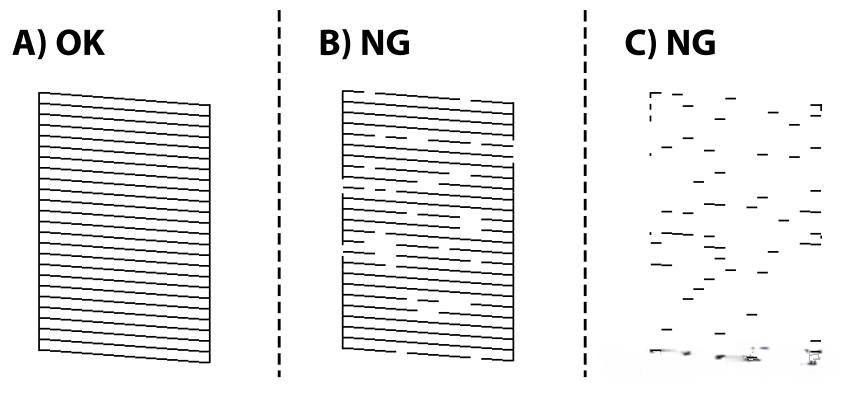
II. Three Major Mechanisms by Which Abnormal Waveform Ink Paths Cause Needle Breakage
Needle breakage (including nozzle clogging and fatigue fracture of needle-like structures) is directly caused by ink path pressure imbalance or mechanical impact, while mismatched waveform parameters are the core root cause.
1. Pulse Timing Mismatch: Pressure Resonance Conflict
Principle:
The ink chamber can be regarded as a “damped resonator.” The cycle of pressure wave propagation inside the chamber is determined by the chamber length and the sound velocity of the ink. If the waveform pulse width is too short or too long, the pressure waves generated by new pulses will cancel out or superimpose with previous waves:
- When cancelled:
Ink droplet ejection force becomes insufficient, causing ink to remain in the nozzle and form dry deposits, eventually leading to “pseudo needle breakage” due to nozzle clogging. - When superimposed:
The chamber pressure rises sharply beyond the mechanical tolerance of the PZT or nozzle, leading to fatigue fracture of the needle structure.
Example:
When using a general waveform with high-viscosity ink, the resonance cycle becomes longer due to reduced ink sound velocity. This pulse timing mismatch can increase the needle breakage rate by more than 30%.
2. Uncontrolled Pressure Fluctuations: Mechanical Impact Overload
Abnormal Voltage Amplitude:
Waveform amplitude directly determines the deformation of the PZT.
- If the amplitude is too high, the chamber contracts excessively, dramatically increasing the impact force of ink on the nozzle—similar to a “high-pressure water jet hitting glass”—resulting in bending or fracture of needle structures.
- If the amplitude is too low, ink cannot be fully expelled, leaving residual ink mixed with impurities that form blockages, indirectly causing needle breakage.
Ink Supply Coordination Failure:
The ejection rhythm controlled by the waveform must synchronize with ink supply pressure. If ink supply pressure becomes unstable (for example, due to a low ink cartridge level), when the waveform drives the PZT to contract, ink cannot replenish in time. This creates negative pressure in the chamber, causing the nozzle to suck in air. When subsequent pulses generate sudden pressure increases, a “water hammer effect” occurs, leading to needle breakage.
3. Multi-Nozzle Interference: Resonance Coupling Damage
Adjacent Nozzle Pulse Interference:
Some printheads use a multi-nozzle shared chamber design. If waveform pulse timing overlaps between adjacent nozzles, pressure waves may couple between chambers. For example, a three-pulse waveform from the left nozzle combined with a single-pulse waveform from the right nozzle can create abnormal pressure in the middle nozzle, resulting in localized needle breakage.
Frequency Adaptation Failure:
When printing frequency increases, pressure waves from previous pulses may not have dissipated before new pulses trigger ejection. This forms a “pressure accumulation effect.” When the frequency approaches the printhead’s resonance frequency, the pressure peak can reach more than twice the normal level, directly causing fracture of the needle structure.
4. Waveform–Ink Mismatch: Chronic Clogging Trigger
Absence of Moisturizing Function:
High-quality waveforms include a “pre-pulse” design—small pulses applied in non-printing states to slightly move ink inside the nozzle and prevent drying. If the waveform lacks this function or the pre-pulse amplitude is insufficient, volatile components in the ink evaporate and form solid particles that clog the nozzle. This creates the illusion of “needle breakage,” and forced printing further wears the needle structure.
Compatibility Issues:
The surface tension difference between weak solvent inks and water-based inks is significant. If the slope of the waveform ramp section is not adjusted accordingly, ink may form wall adhesion residue inside the nozzle. Long-term accumulation eventually leads to clogging-type needle breakage.
III. Typical Scenarios and Verification Methods
| Needle Breakage Type | Waveform Ink Path Abnormal Characteristics | Detection and Verification Method |
| Clogging-Type Needle Breakage | Pulse trailing slope too slow, droplet tailing | JetXpert observation shows abnormal bulging of the nozzle meniscus |
| Fatigue Fracture Type | Waveform amplitude fluctuation >5%, obvious pressure wave overlap | Oscilloscope detects waveform distortion with peak spikes |
| Impact Fracture Type | Pulse width mismatch with ink sound velocity >10% | Measure ink sound velocity and compare with waveform resonance cycle settings |
Conclusion
The waveform ink path is the core control hub of the printhead’s “pressure – motion – timing” system. Its parameters, along with compatibility between printhead structure, ink characteristics, and ink supply systems, directly determine the risk of needle breakage.
In essence, needle breakage is the result of a coordinated failure between waveform-controlled pressure signals, printhead mechanical performance, and ink physical properties, rather than a malfunction of a single component.