
The Role of Feathering in Inkjet Printing Systems
Epson I3200 Printhead Status Diagram

- 360 × 600 DPI – 1 Pass Printing

- 360 × 600 DPI – 1 Pass Printing with Feathering

- 360 × 1200 DPI – 2 Pass Printing

- 360 × 1200 DPI – 2 Pass Printing with Feathering
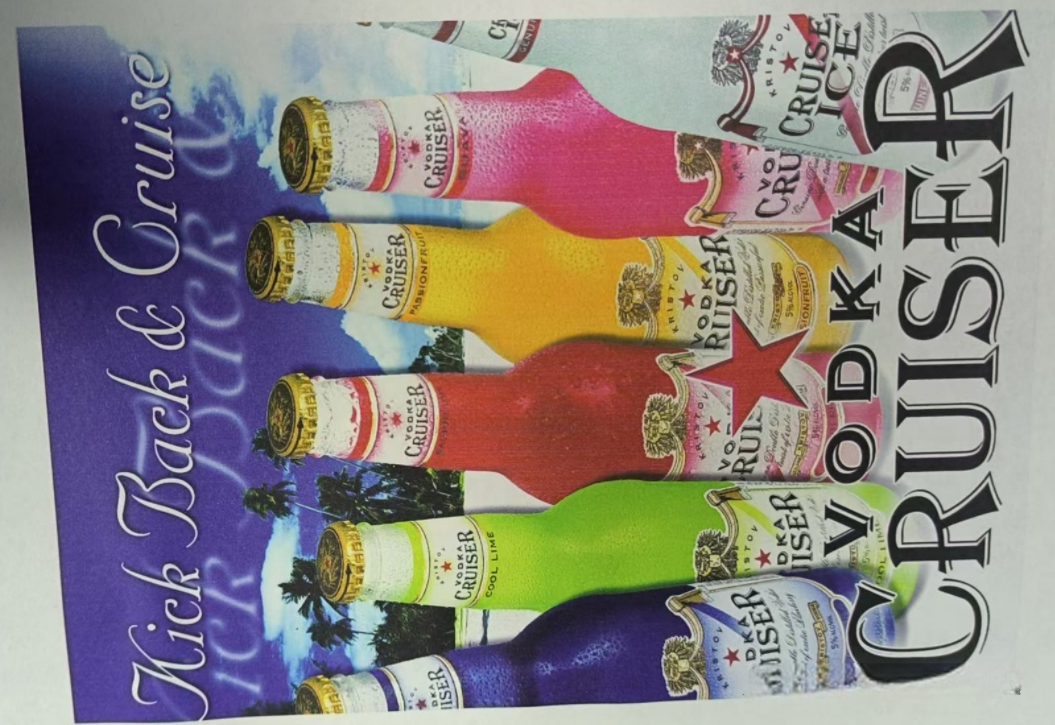
- 720 × 1200 DPI – 4 Pass Printing
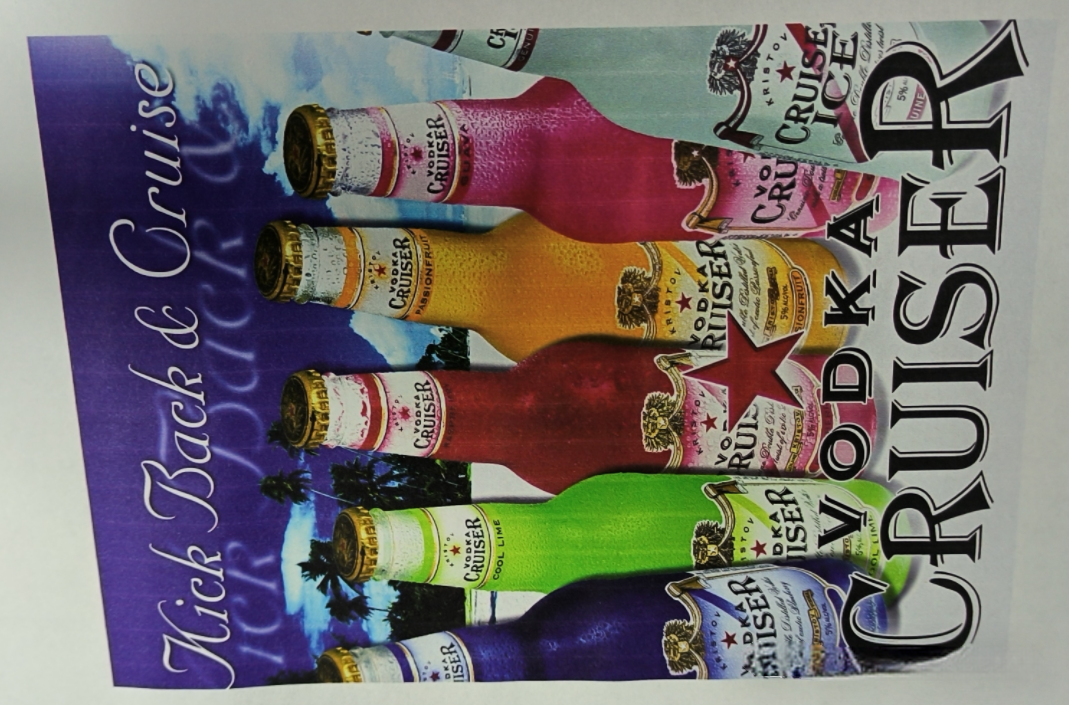
- 720 × 1200 DPI – 4 Pass Printing with Feathering

Feathering Function in Inkjet Printing Systems
In inkjet printing systems, feathering is a critical function designed to optimize print quality, eliminate visual defects caused by mechanical inaccuracies, and enhance image smoothness through specialized inkjet control strategies. Its core functions and implementation methods are described below.
I. Core Functions
1. Elimination of PASS Banding (Horizontal Banding)
PASS banding refers to parallel stripes caused by step errors in the carriage movement. Feathering compensates for gaps or overlaps by redistributing ink dots, creating smoother transitions and preventing visible banding artifacts.
Example:
In UV printers, feathering corrects Y-axis stepping errors and resolves noise caused by dot gaps between passes.
2. Reduced Ink Consumption
- Feathered inkjet strategies reduce ink deposition in overlapping areas.
- This minimizes ink waste and significantly lowers long-term operating costs.
3. Improved Color Gradation and Printing Accuracy
- Smooths large solid-color areas and gradient transitions.
- Higher feathering values (e.g., 80–100) significantly improve image fineness, especially in high-precision industrial printing applications.
II. Implementation Methods
1. Edge Dot Skipping Technology
- Selective inkjetting is applied at the edges of each printing pass.
- By reducing or specially arranging dot density, a gradient transition zone is formed to compensate for stepping errors.
2. Intelligent Wave-Interleaved Printing
- Combines wave-based carriage motion with interleaving algorithms.
- Dynamically adjusts inkjet positions, replacing traditional linear printing to fundamentally reduce PASS banding.
3. Dynamic Printhead Voltage Adjustment
- Some industrial printheads (e.g., Seiko SPT255) feature built-in temperature-controlled voltage systems.
- These systems automatically optimize feathering performance while reducing the risk of missing nozzles.
4. Zonal Feathering Processing
- The image is divided into multiple sub-regions.
- Each region is processed independently using feathering algorithms to generate print data, minimizing the impact of overall mechanical errors.
III. Parameter Settings and Their Effects
| Parameter Type | Function | Typical Range | Impact on Printing |
| Feathering Value | Controls edge blending strength | 0%–200% | Higher values produce smoother images but reduce speed |
| Mode Selection | Large / Medium / Small feathering | — | Large feathering greatly improves quality at the expense of efficiency |
Recommended Settings:
- Enable feathering by default, especially when printing solid colors or gradients.
- Balance feathering level with precision requirements; for high-accuracy applications, use large feathering + low-speed mode.
IV. Summary
Feathering technology, through intelligent ink-dot distribution and dynamic parameter control, has become a core solution for compensating mechanical inaccuracies in inkjet systems. It directly improves both image quality and cost efficiency.
In practical applications, feathering should be flexibly configured based on equipment capabilities (e.g., Seiko printheads, Hanway proprietary algorithms) and image requirements, achieving an optimal balance between productivity and print quality.
Channel Data Comparison
- Channel data without processing

- Channel data after applying one feathering mode

- Channel data after applying another feathering mode

Principles and Methods of Ink Degassing in Ink Delivery Systems
Ink degassing is a critical process in inkjet printing that removes dissolved gases or microbubbles from ink, significantly improving printing stability and accuracy. The key points are outlined below.
I. Why Degassing Is Necessary
1. Effects of Air Bubbles
- Dissolved gases or microbubbles disturb the pressure wave propagation in piezoelectric printheads, leading to droplet trajectory deviation, misfiring, or nozzle dropouts.
- Water-based inks (including many UV inks) are more prone to bubble formation due to volatile components and therefore require forced degassing.
2. Performance Considerations
- High printing frequencies (>10 kHz) or multi-pulse waveforms are especially sensitive to bubbles.
- Effective degassing significantly reduces nozzle failure rates and improves jetting reliability.
II. Degassing Technologies
1. Membrane Degassing
- Uses a vacuum membrane (e.g., PTFE) to separate dissolved gases from ink.
- Typical vacuum levels: 300–400 mbar.
- Suitable for circulating ink supply systems and must be matched to ink flow rate
(e.g., recommended flow ≤50 mL/min for Spectra/Dimatix printheads).
2. Thermal Degassing
- Heats ink to 40–60 °C to accelerate gas release.
- Often combined with nitrogen purging, similar to solvent degassing procedures used in chemical laboratories.
3. Integrated Degassing Designs
- Some printheads (e.g., Spectra S-series) incorporate built-in degassing reservoirs directly into the ink path, simplifying system design.
III. Functions of Degassing Devices
(Commonly referred to as a degassing chamber, “degassing lung,” or bubble trap)
1. Elimination of Bubble Interference
- Removes dissolved gases and microbubbles to prevent pressure disturbances inside nozzle channels that cause jetting instability or dropouts.
2. Improved Printing Stability
- Reduces gas content in ink, minimizing bubble growth and diffusion, and ensuring consistent droplet formation and placement accuracy.
3. Extended Equipment Lifespan
- Prevents cavitation caused by bubbles, reducing mechanical wear on printheads, pumps, and ink delivery components.

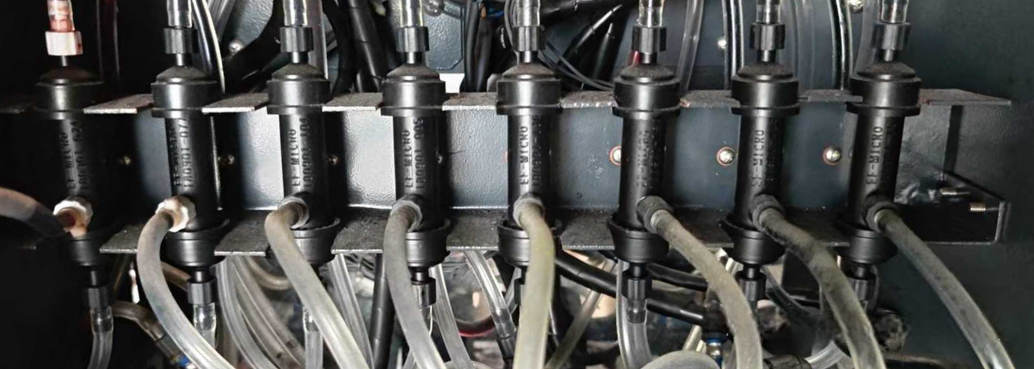
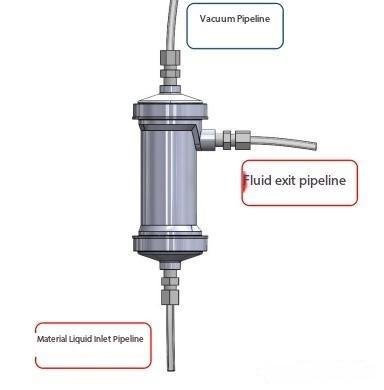
IV. Working Principles of Degassing Devices
1. Physical Mechanism
- Based on Henry’s Law: lowering the partial pressure of gases via vacuum encourages dissolved gases to escape from the ink.
2. Technical Implementation
- Vacuum Degassing:
A vacuum pump creates negative pressure, dispersing ink into thin films or microdroplets to increase gas–liquid contact area and accelerate gas release. - Heated Recirculation Degassing:
Heating lowers gas solubility, while continuous circulation removes released bubbles—used in some industrial inkjet systems.
3. System Integration
High-end inkjet systems integrate degassing modules with pressure regulation, maintaining a bubble-free ink path during continuous operation.
V. Typical Application Scenarios
- Industrial Inkjet Printing:
High-precision applications such as UV inkjet printing require strict degassing control to prevent image defects caused by bubbles.